As a practising designer (unlike the majority of artists), there are usually specific limits around projects. Sometimes this comes in the form of a client’s brief, or requirements and needs. There are usually some fixed functions to accommodate, but perhaps more significant might be the immediate surrounds of what you are designing – type and scale of production means, available technology, budget and time restraints, material, processing, and logistical restrictions.
The very act of taking part in a residency programme will typically throw those concerns in the air; possibly some will return as a plan is formed. Having a certain amount of free space and time to allow the development and forming of a plan is key. It might essentially be a writing of one’s own brief, but perhaps more exciting is to allow the research that follows to impact the direction of travel. This can facilitate outcomes not envisaged at the start line.
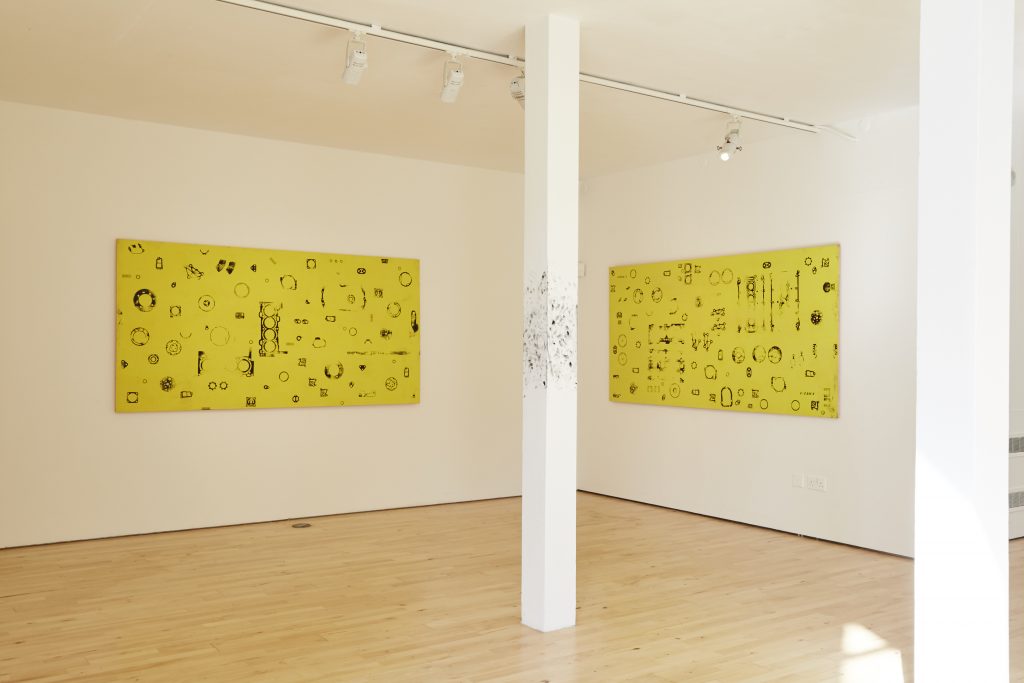
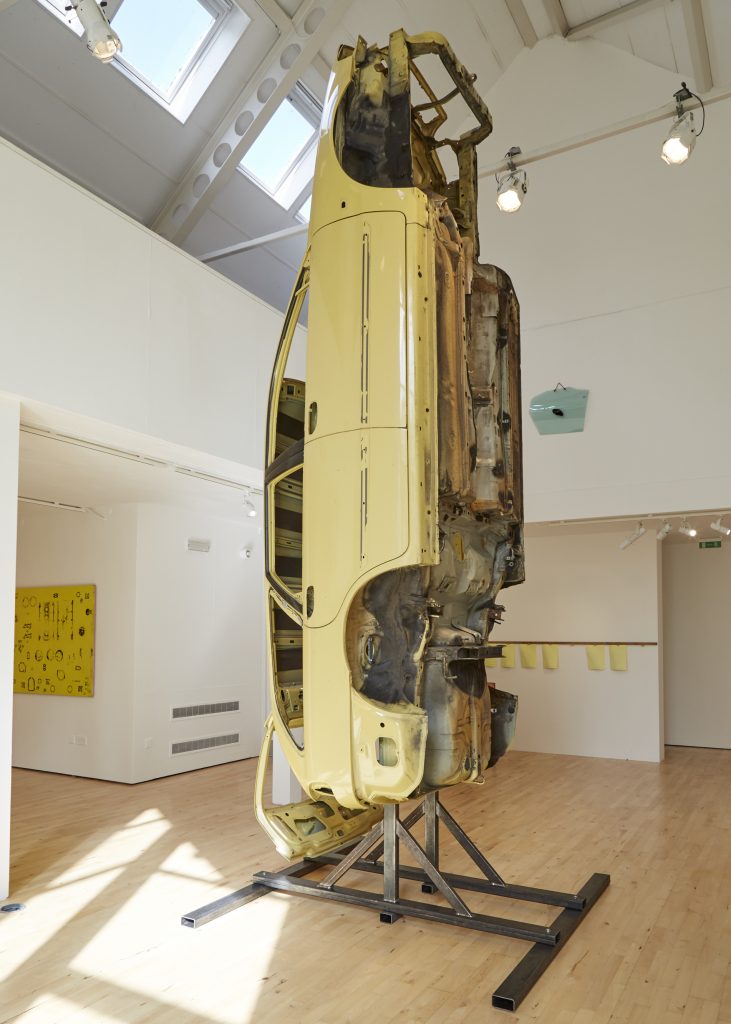
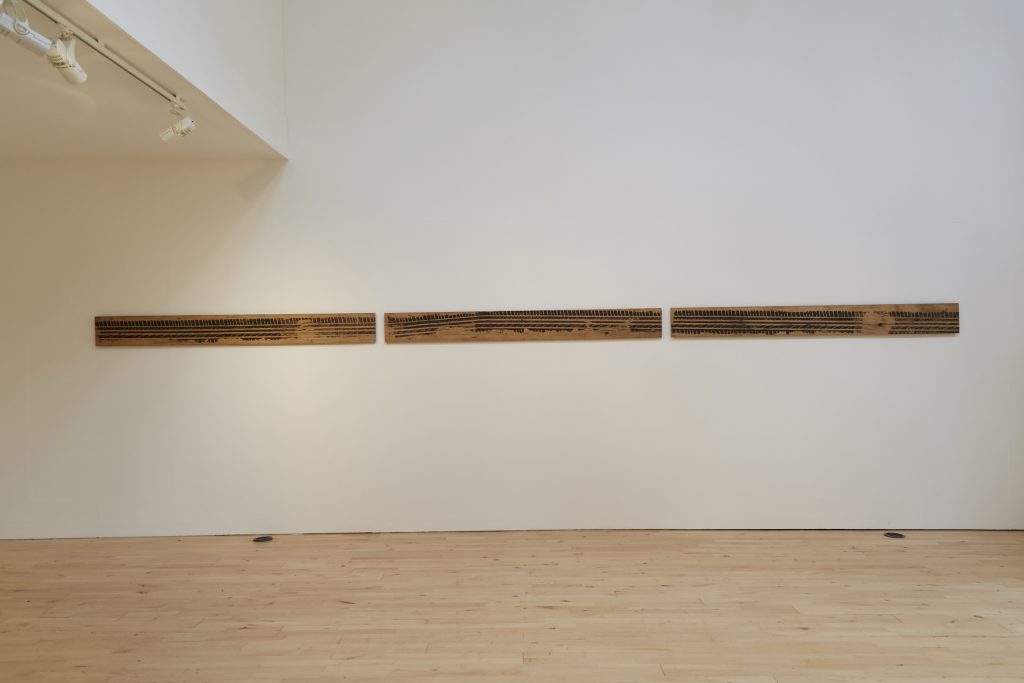
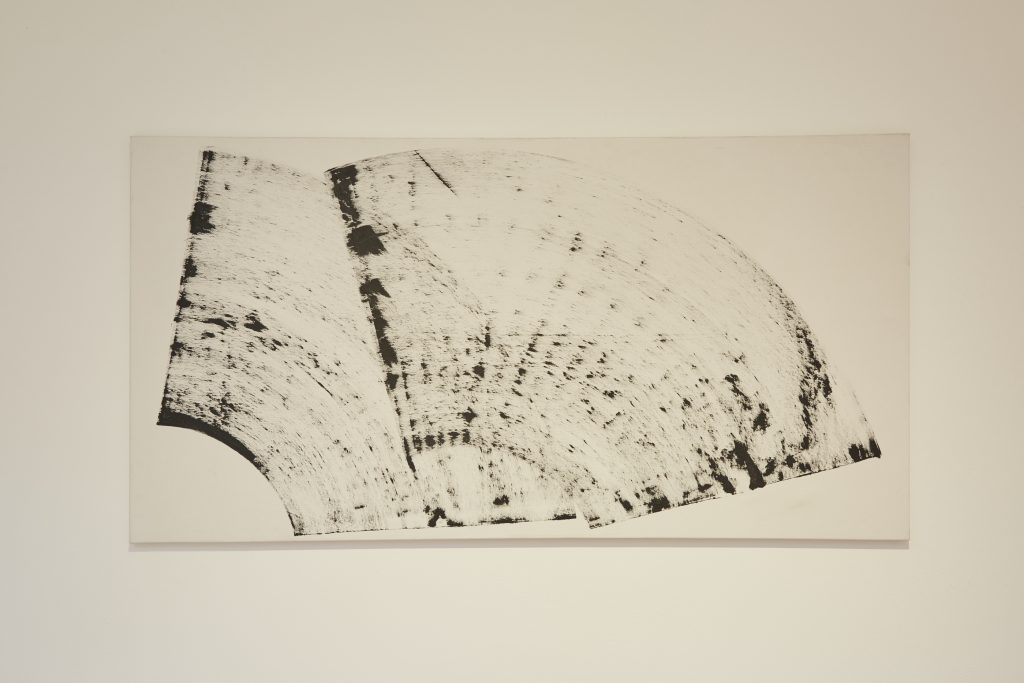
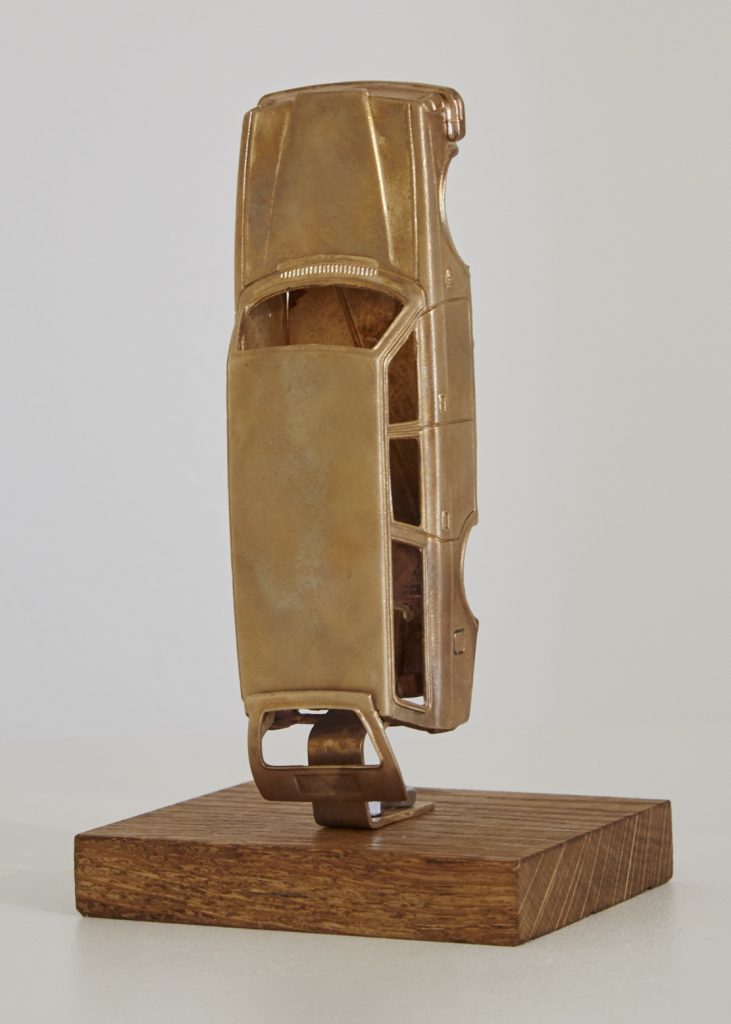
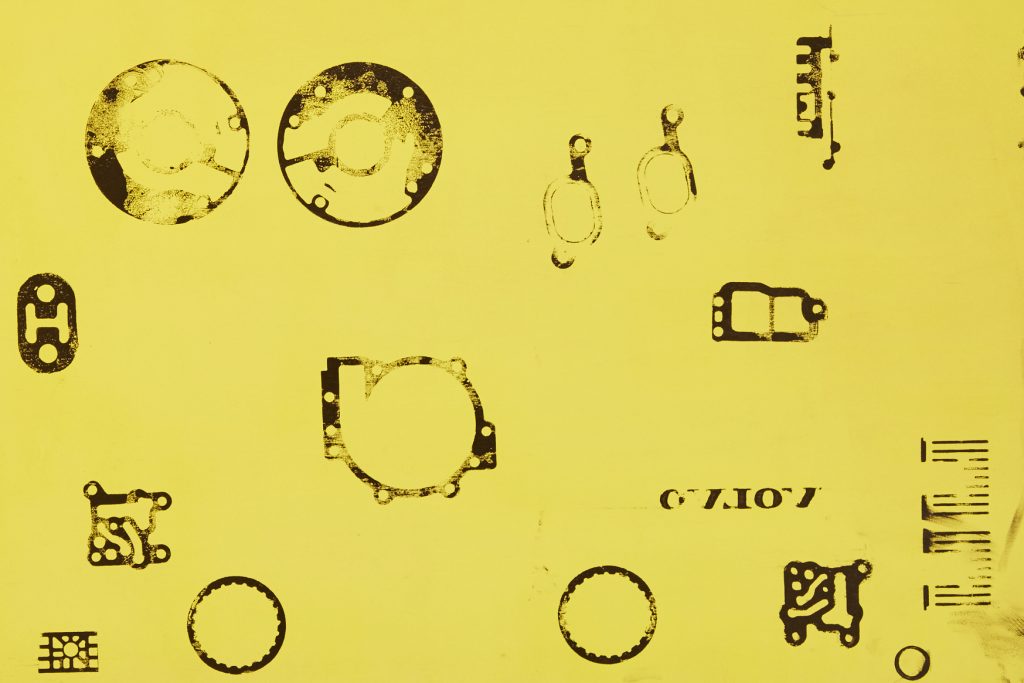
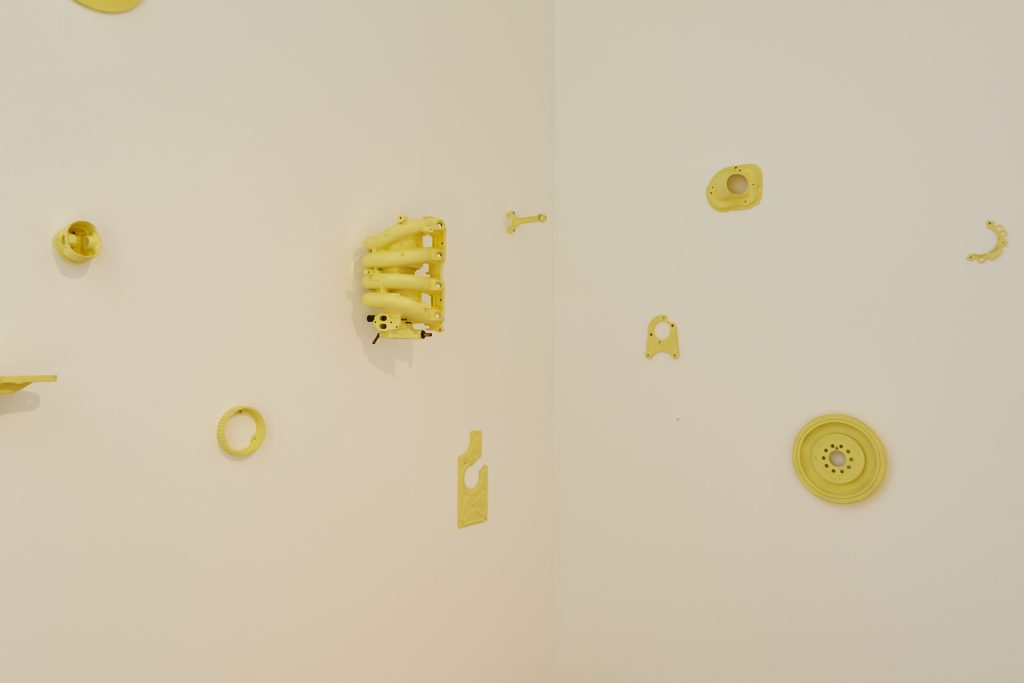
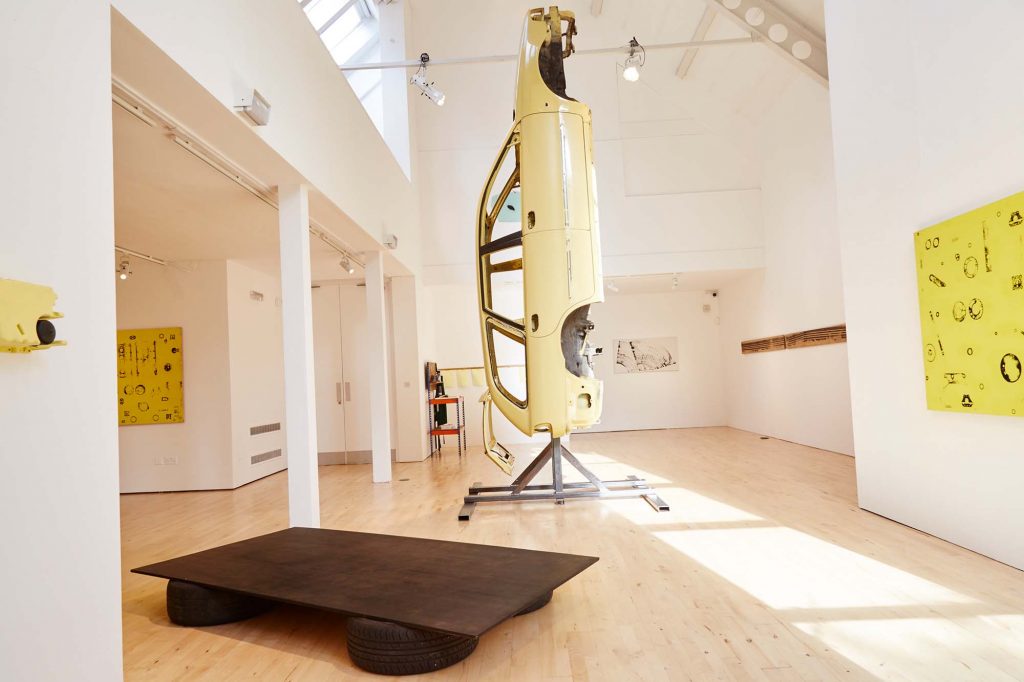
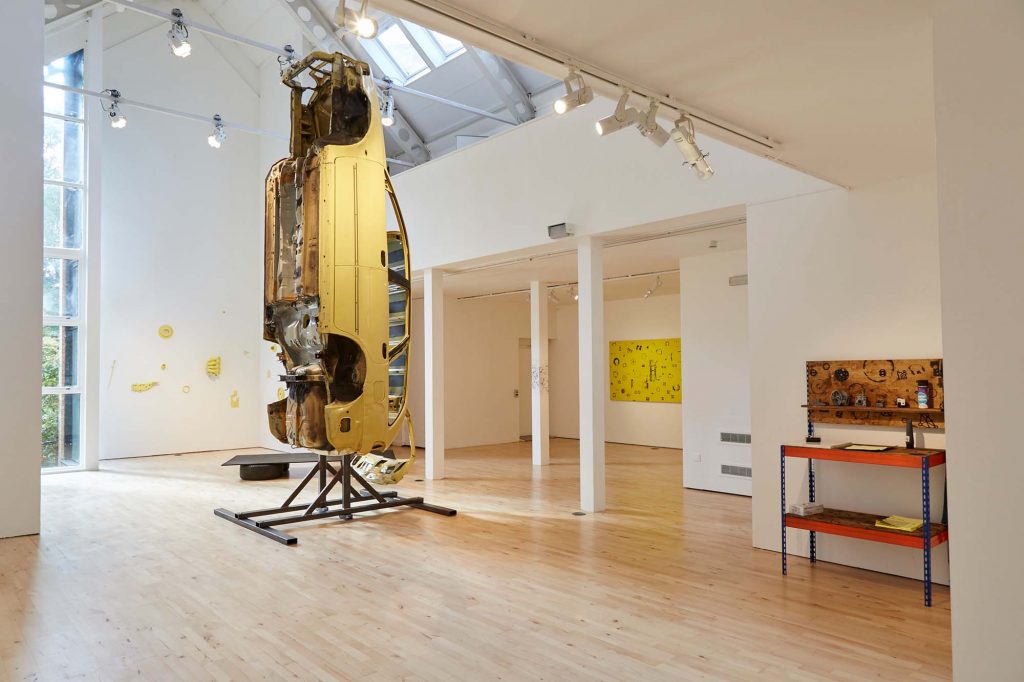
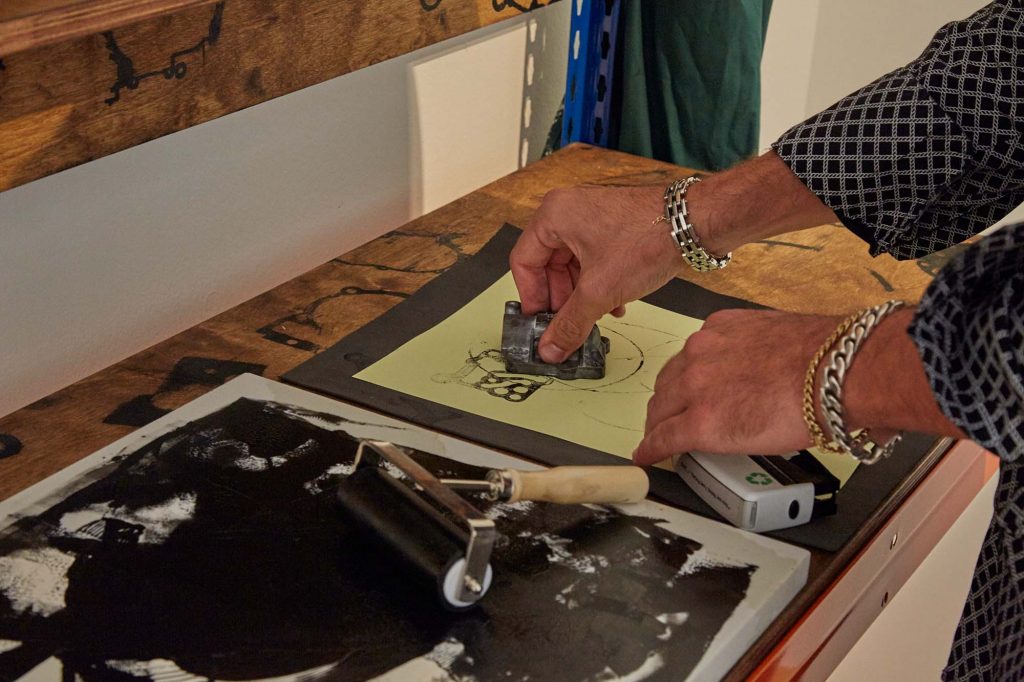
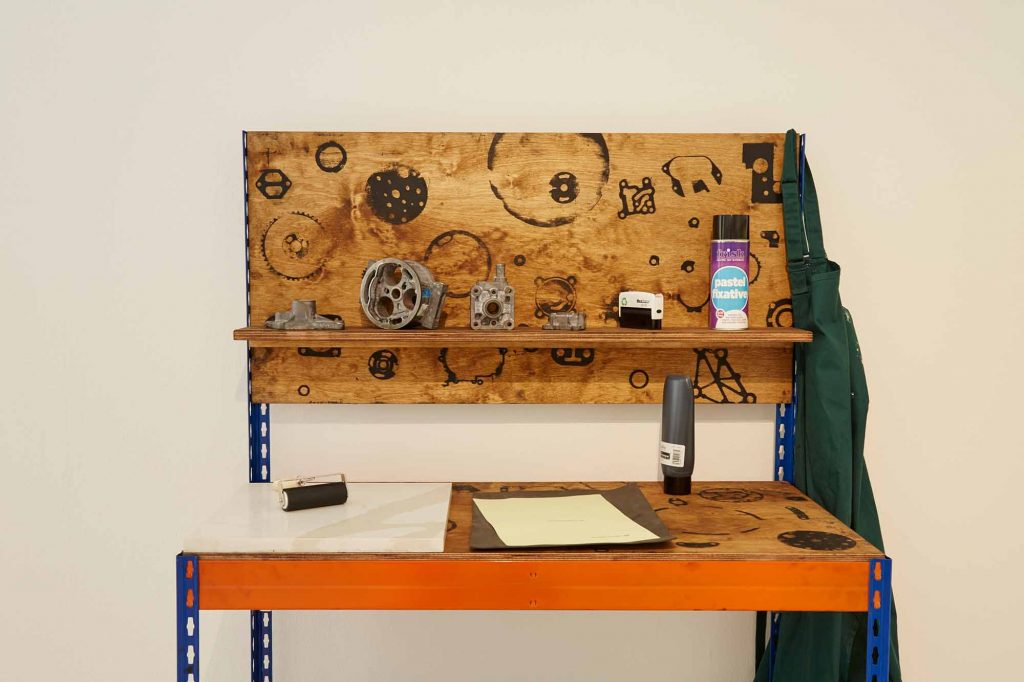
For this kind of investigative route to occur requires “elasticity” of the mind and approach, but perhaps much more importantly, from the residency’s host organisation. Host elasticity is essentially a kind of freedom to allow research to reach a natural conclusion. My own most recent experience of this was during the Stanley Picker Fellowship, which I received with a proposal to research alternative means of printing on plywood or wood (with potato printing referenced for its essential accessibility and ease). A project outside of the fellowship (with a North London school), which I was working on with curator Andree Cooke, brought to light the coming end of useful life of Andree’s (beloved) canary yellow Volvo estate. On the day she told me this, I cycled home with it in mind as an issue that felt in need of some sort of attention. That night, I recognised that Andree’s Volvo could provide a series of “potatoes” for evolving my printing experiments. It also would provide a narrative – a vehicle (literally & conceptually!) – that would drive the research and prompt wider-ranging experimental techniques. The results of this would create an accessible and engaging exhibition content, with references to a series of existing artist projects involving cars *, as well as providing ideal content with which to develop gallery workshops.
I was immediately aware that Andree would need to approve the plan (if not, another donor car could be found), but Andree’s felt like the perfect vehicle, perfect timing, and dignified end-of-life plan. More essential though, the hosts would need to show elasticity, as bringing a car into the gallery was quite a stretch from what I had originally proposed. However, they proved tremendously elastic, and immediately approved (and encouraged?) the approach. The inclusion of the car itself and what it provided in terms of printing experiments and techniques was key to the development and success of the project and exhibition, prompting the research content to really occupy and give presence and accessibility to the project and the exhibition.
*Roman Signer (Bicycle with Paint), Damian Ortega (Several VW Beetle projects), Gabriel Orozco (La DS), Richard Hamilton (Tyre Studies), Robert Rauschenberg (Automobile Tire Print), Simon Starling (Polski Fiat project)