A Simultaneous Agreement is Stanley Picker Fellow FRAUD’s (Audrey Samson and Francisco Gallardo) latest body of work which centres on the circulation of nutrients and infrastructures permeating the current UK water crisis. Examining the intimacy between the fertiliser mine and the treatment plant, the project asks, when minerals move across the earth what do they bring with them?
There are 4,929 bodies of water in England, all of which are currently deemed unfit for both human and more-than-human life. Like most English rivers, the Hogsmill, which flows either side of the Stanley Picker Gallery, contains dangerous levels of chemical substances stemming from agricultural run-off and sewage overflow. Water – the stuff of life – now also harbours unevenly distributed violence. Through art- and design-based approaches rooted in spatial advocacy, the project aims to unravel the complexity of corporate, financial and governmental interests that have led to wide-scale water degradation.
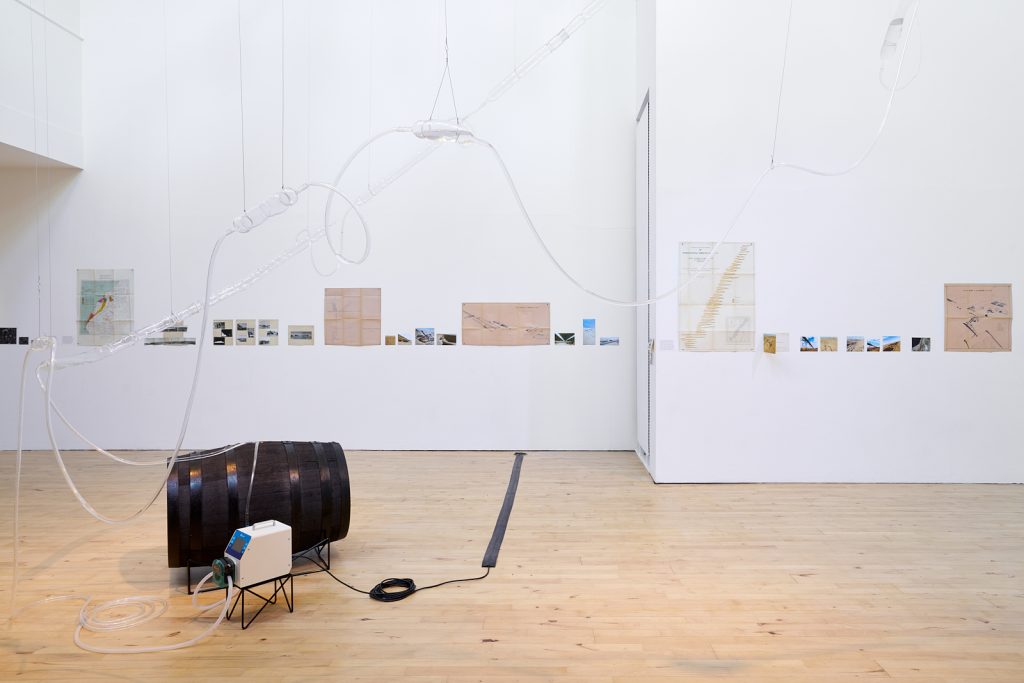
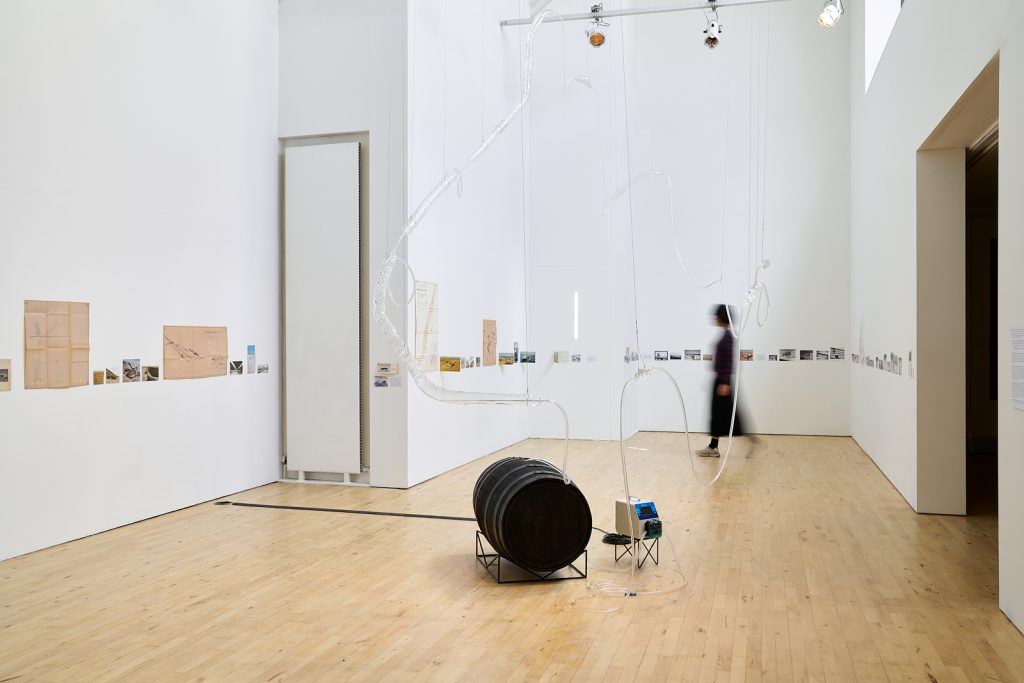
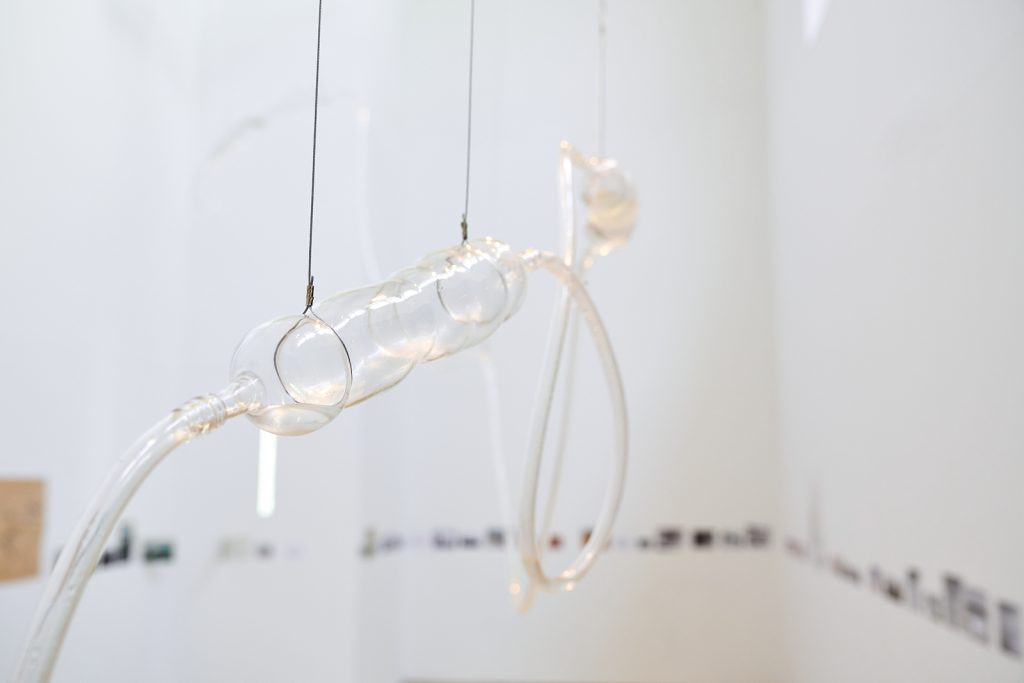
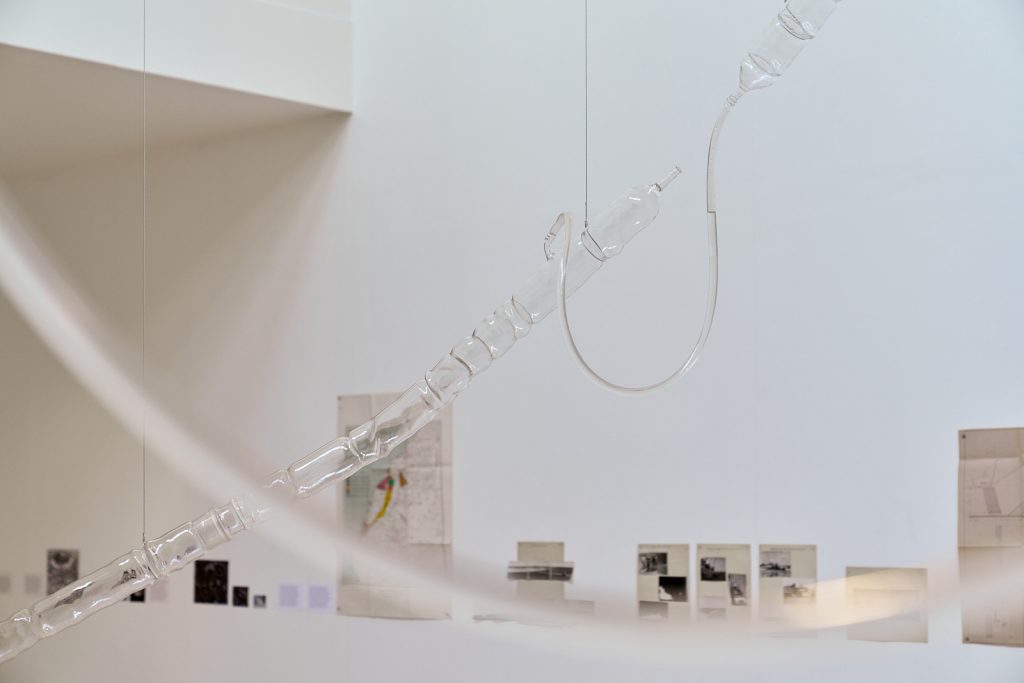
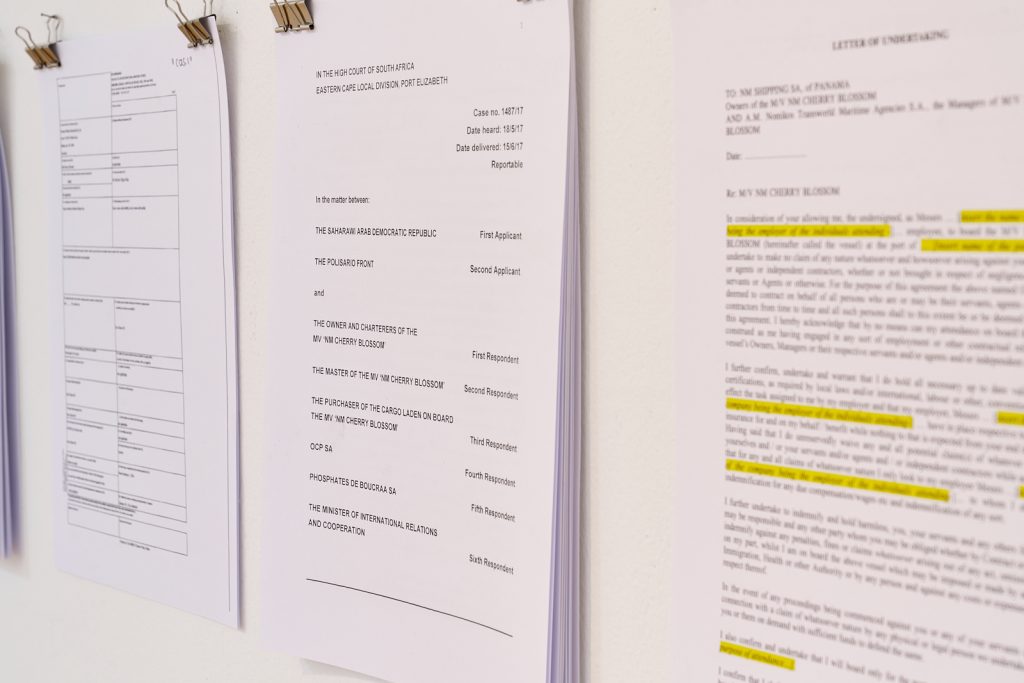
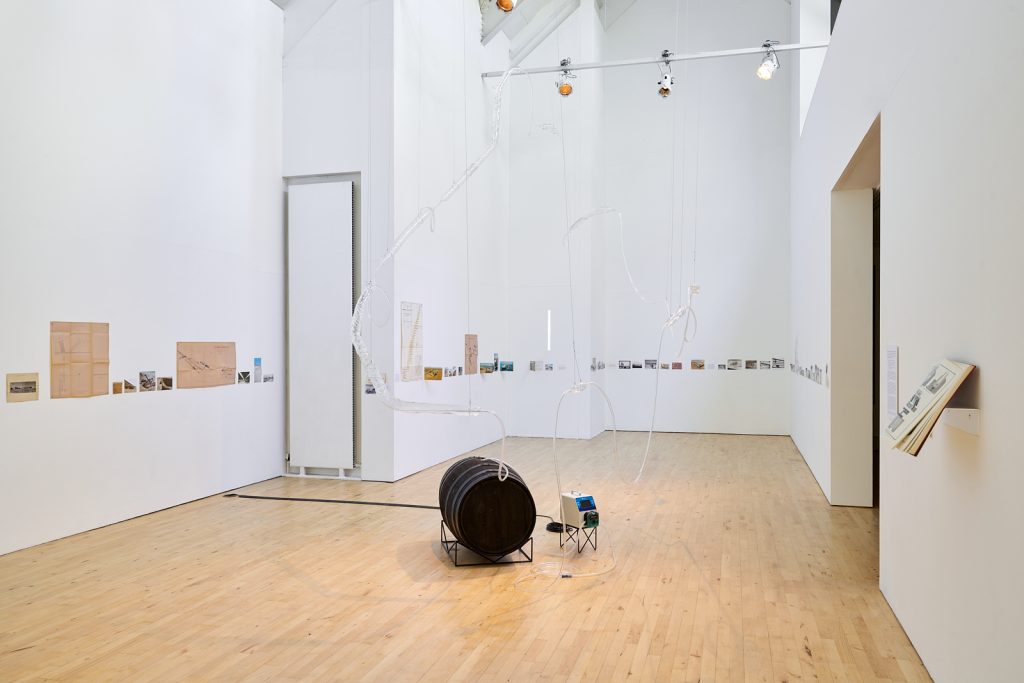
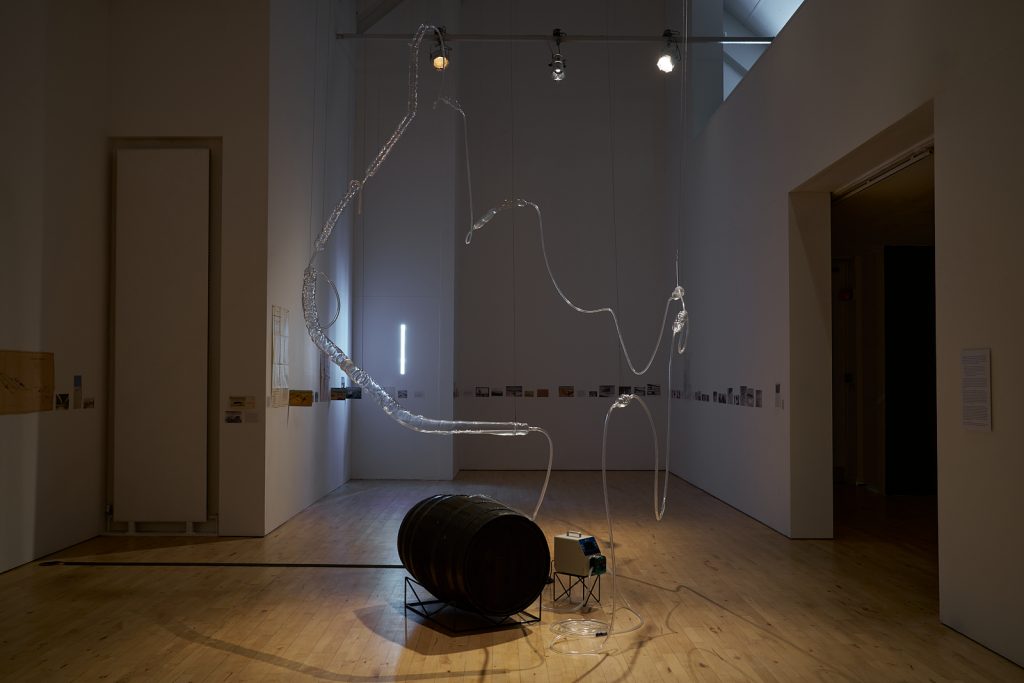
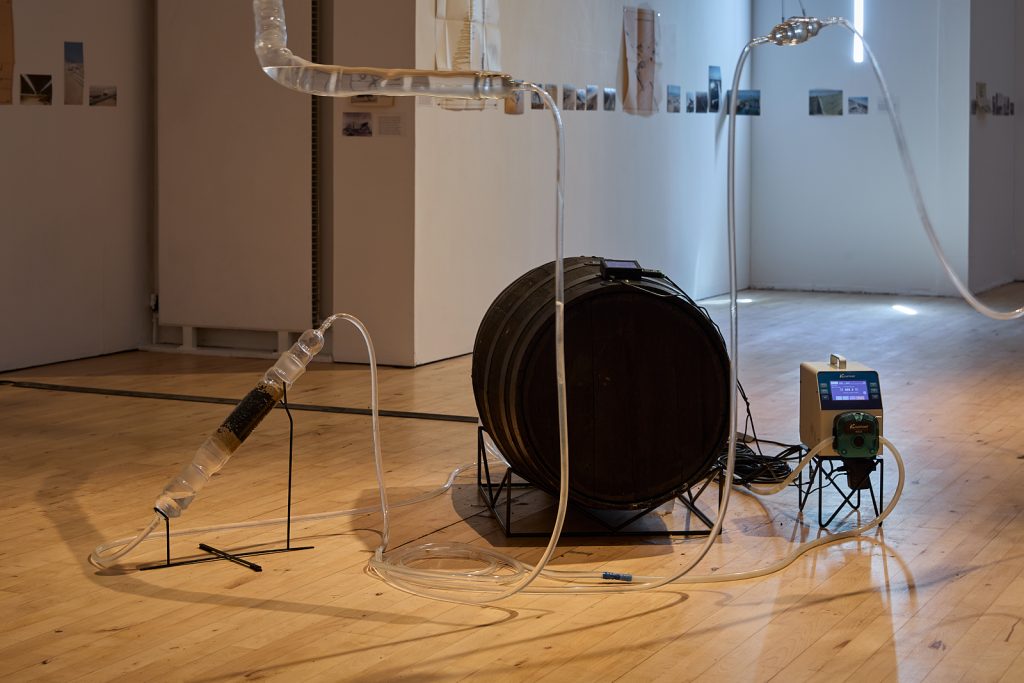
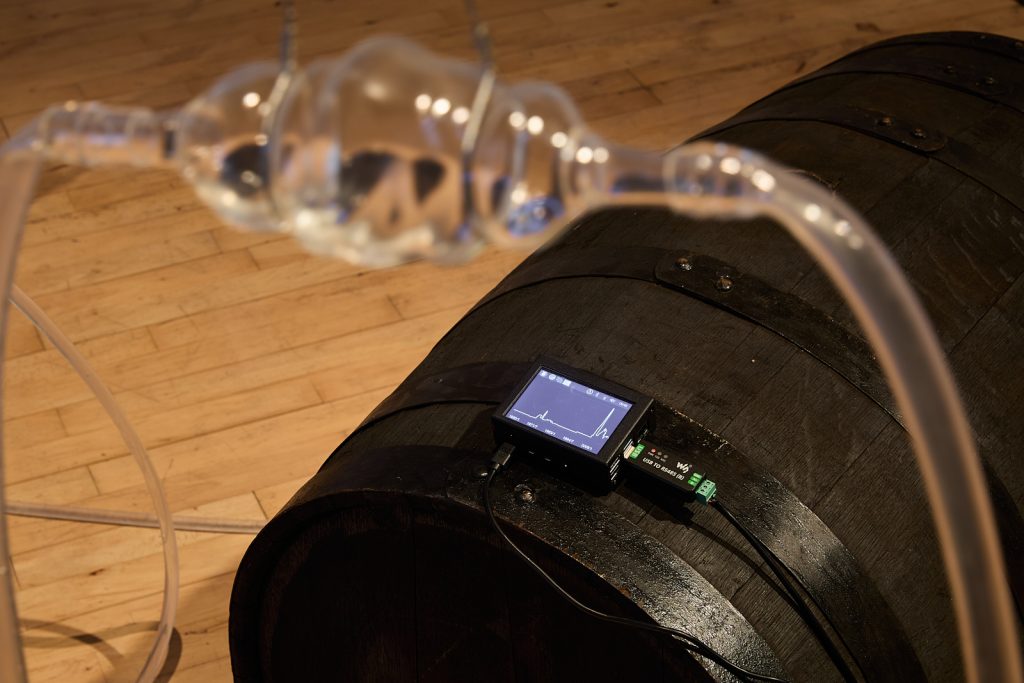
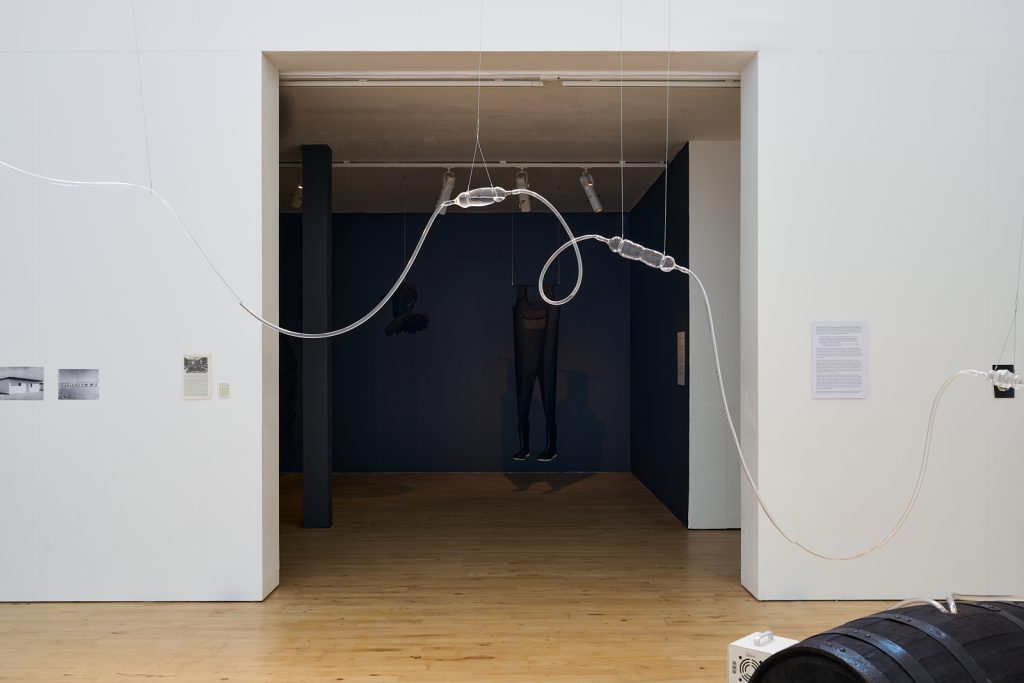
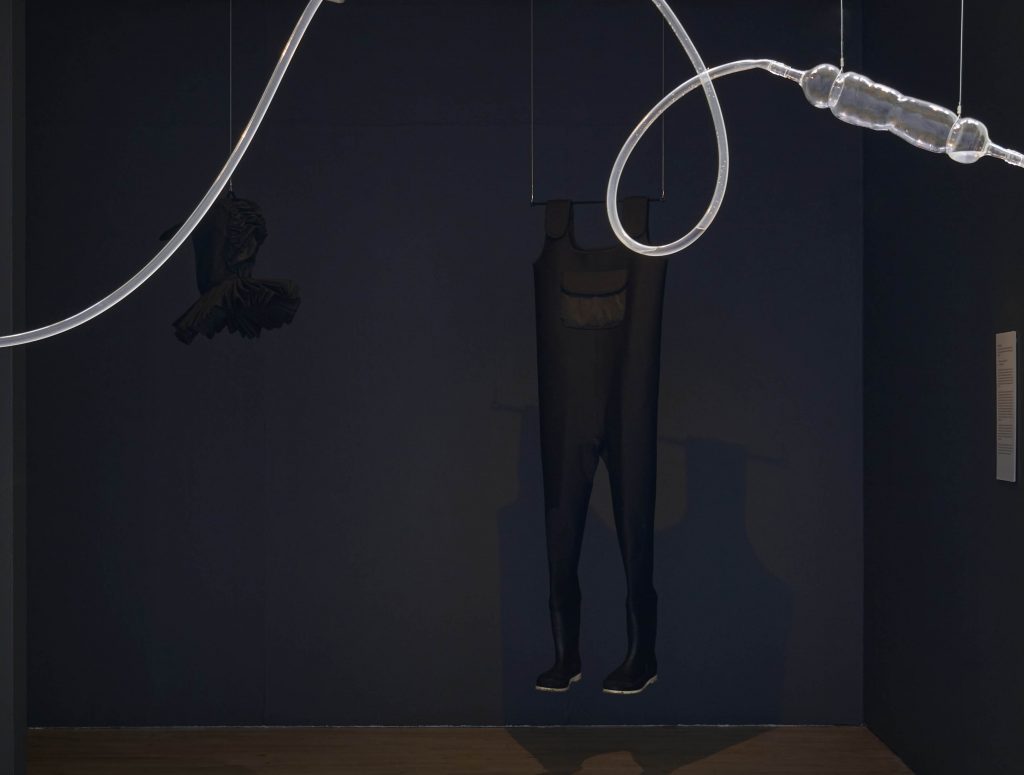
As part of the exhibition, a glass fountain – Saharan Rock, on Panamanian Soil, in South African Waters – filters local Hogsmill river water with activated charcoal. The sculpture charts the recirculation of phosphate rock via the path of the NM Cherry Blossom – a bulk-carrier ship carrying contested phosphate rock from the Sahara to East Asia. In doing so, it traces sediments which build (and unbuild) worlds as they move from the shallow bench of the mine to the port warehouse and from South African tribunals to industrial farmland. The exhibition will host a consultation and public campaign to make the nearby Hogsmill River swimmable, using bathing request legislation as a tool for considering the intimacy with nutrients as pollutants, from their extraction and production to their re-circulation in water bodies (both human and non-human).
While activated charcoal purifies water, the material’s internal pore networks are adsorbing (not dissolving) contaminants. This economy of accumulation and abatement shifts the harm, pointing to problematic ‘scalable solutions’ which fuel the green / circular economy. Equally charcoal shares ties with conflict finance, where its geopolitics sit upstream, sometimes linked to deforestation, biopiracy and illicit trade, and once made commodity, its movement intersects with security regimes and militarisation.
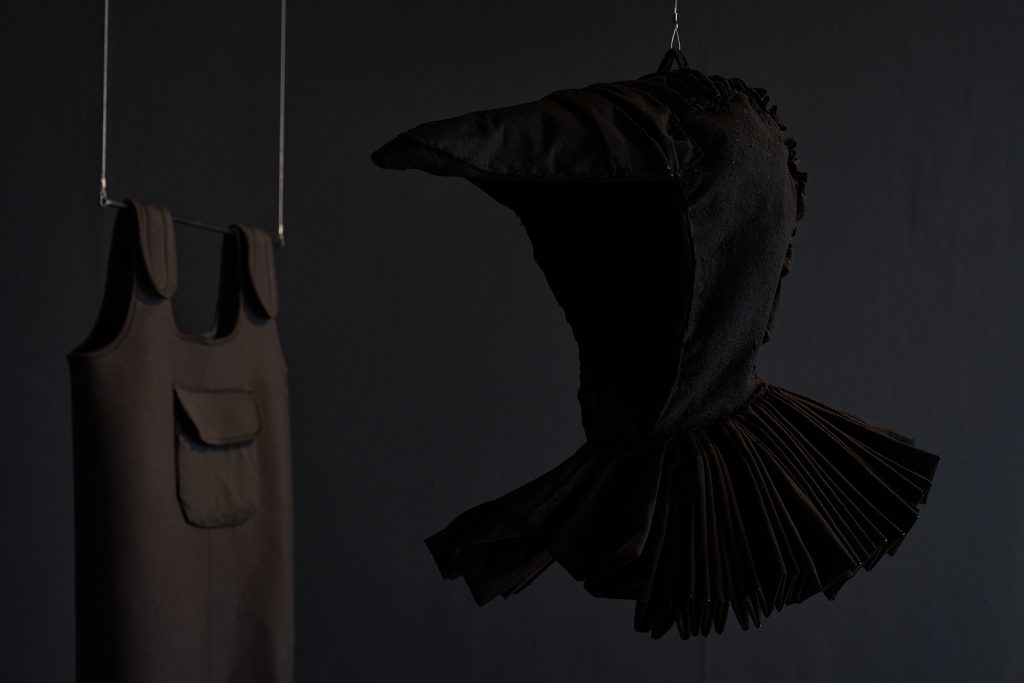
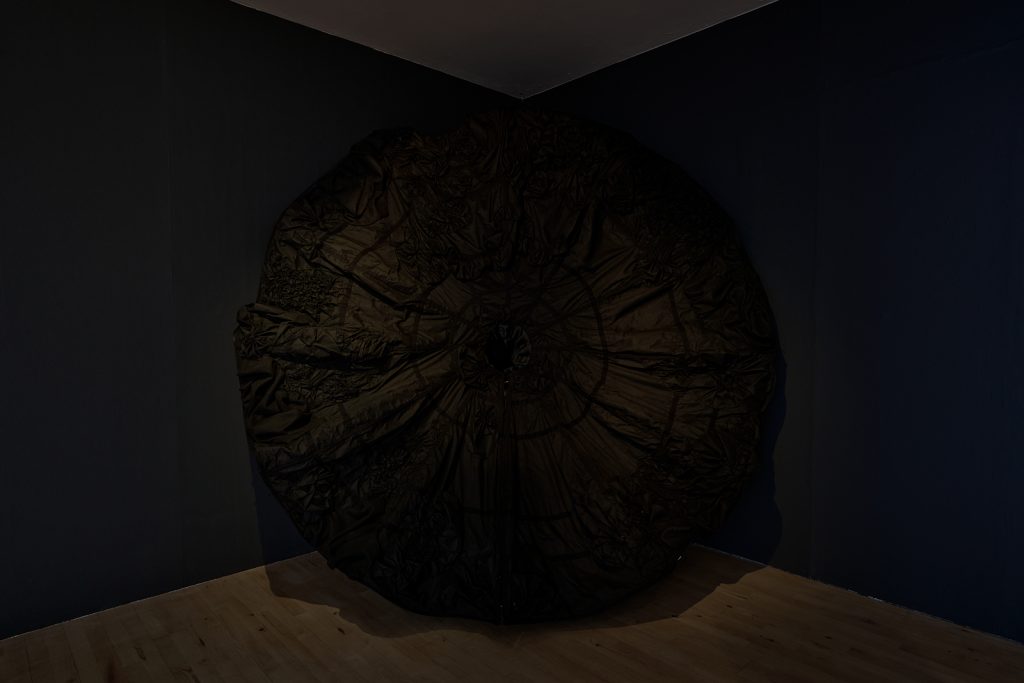
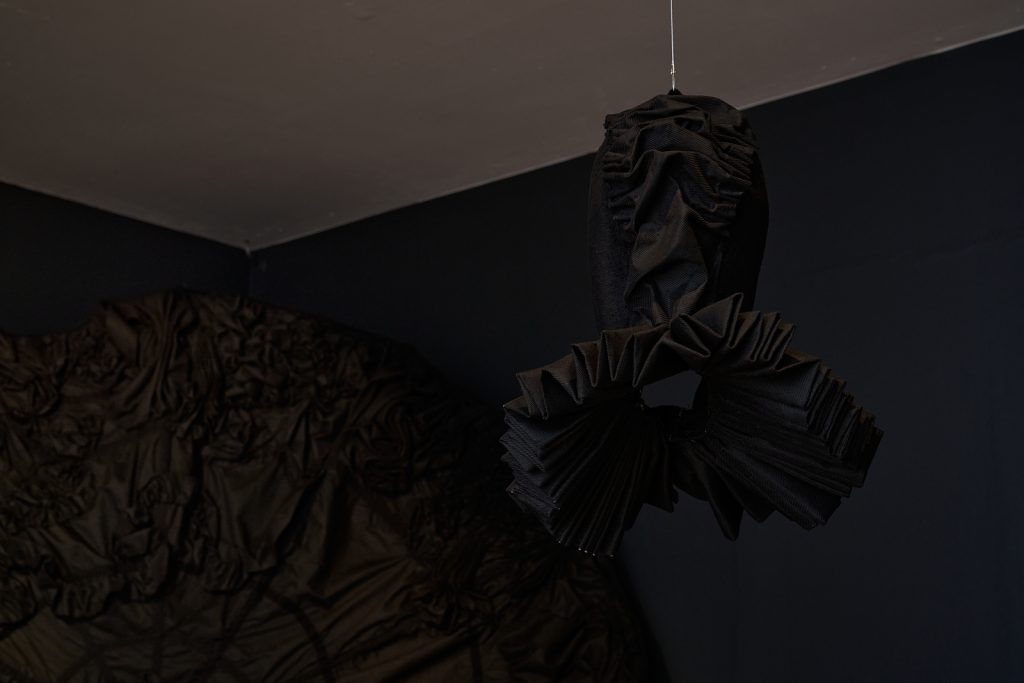
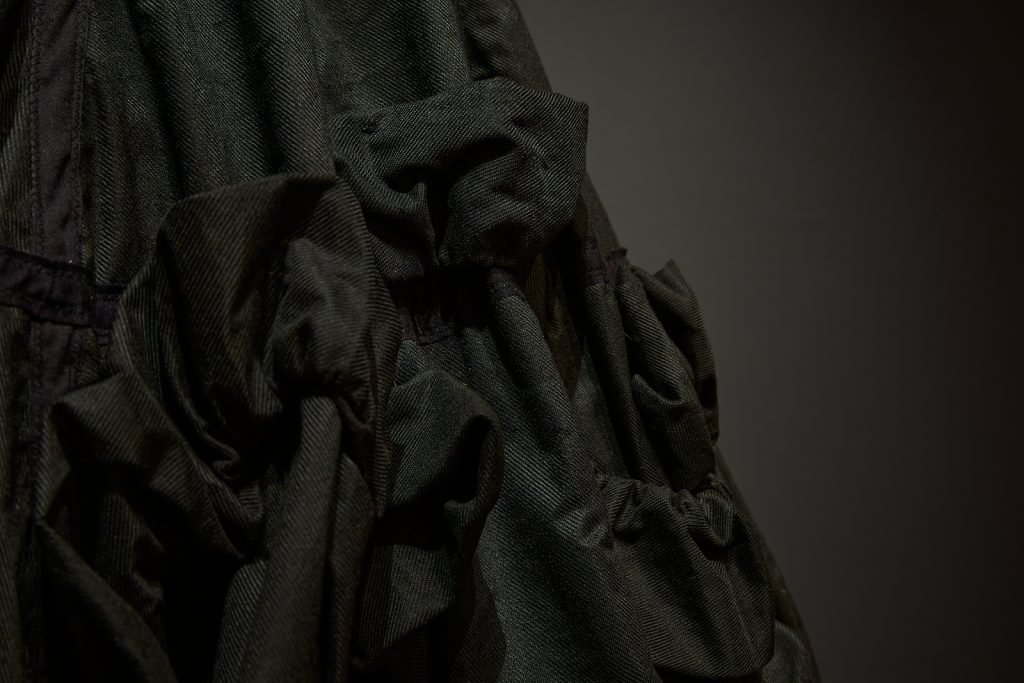
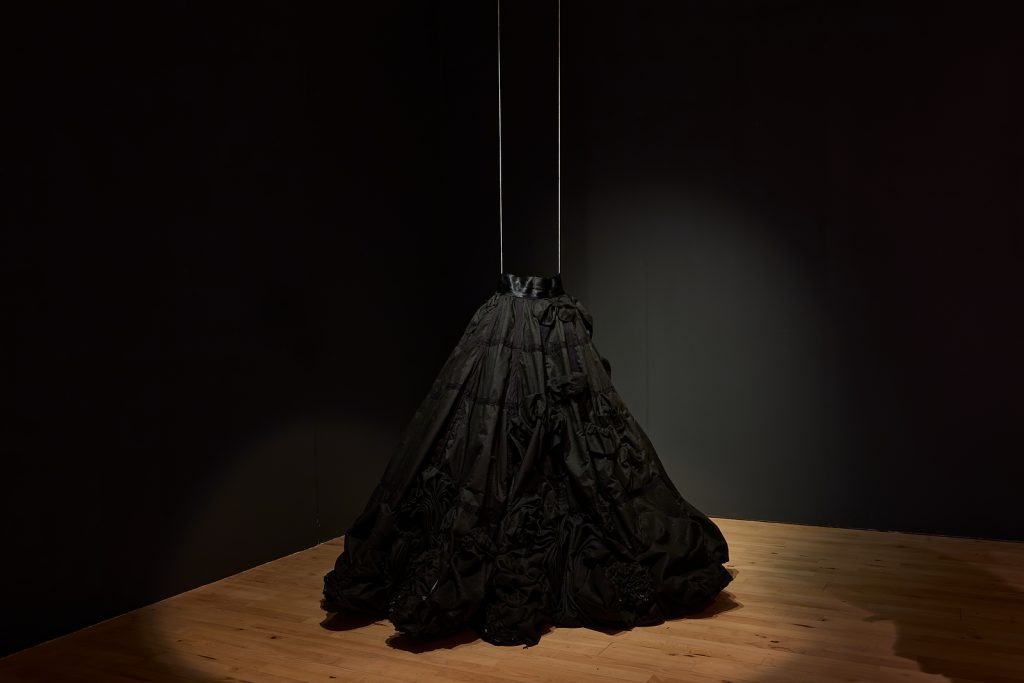
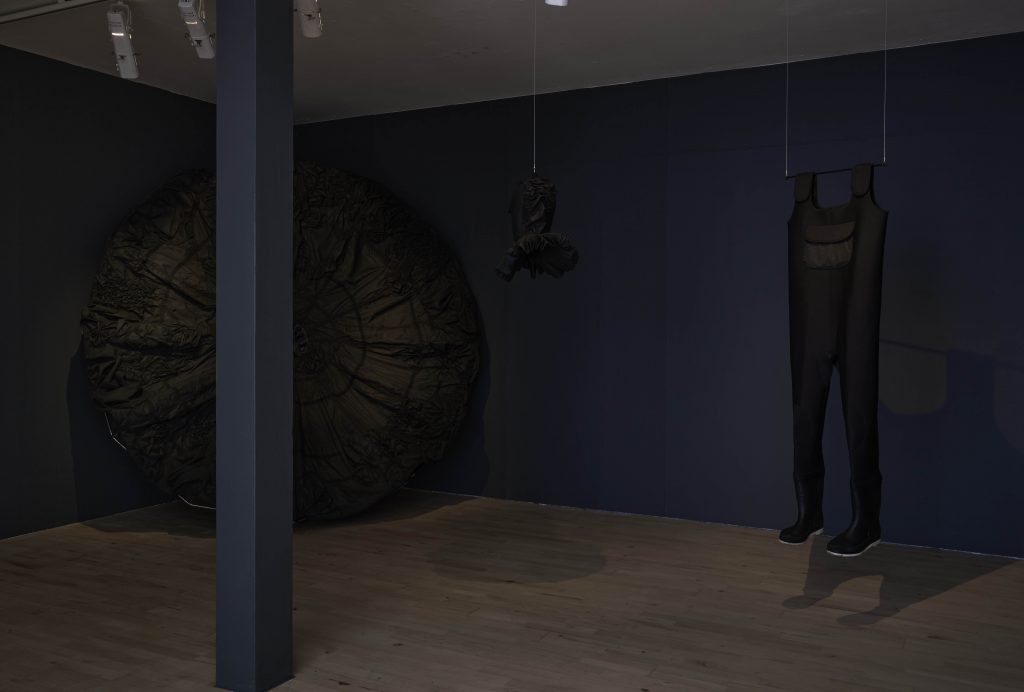
Included in the exhibition are A New Alchemy – wearable activated charcoal sculptures. These garments seal the skin from interaction with the surrounding environment which will allow the wearer to enter the polluted river. The costume forms part of Standing for the River, a performance event held on the 12 June 2026 that will become part of the evidence required for the submission to request bathing site designation. This mediated immersion without contact gestures towards our technologically‑buffered experience of “nature”. By effectively capturing pollutants at its surface, the sculpture also stays with the situated trouble of toxicity, rather than offshoring its surface relations.
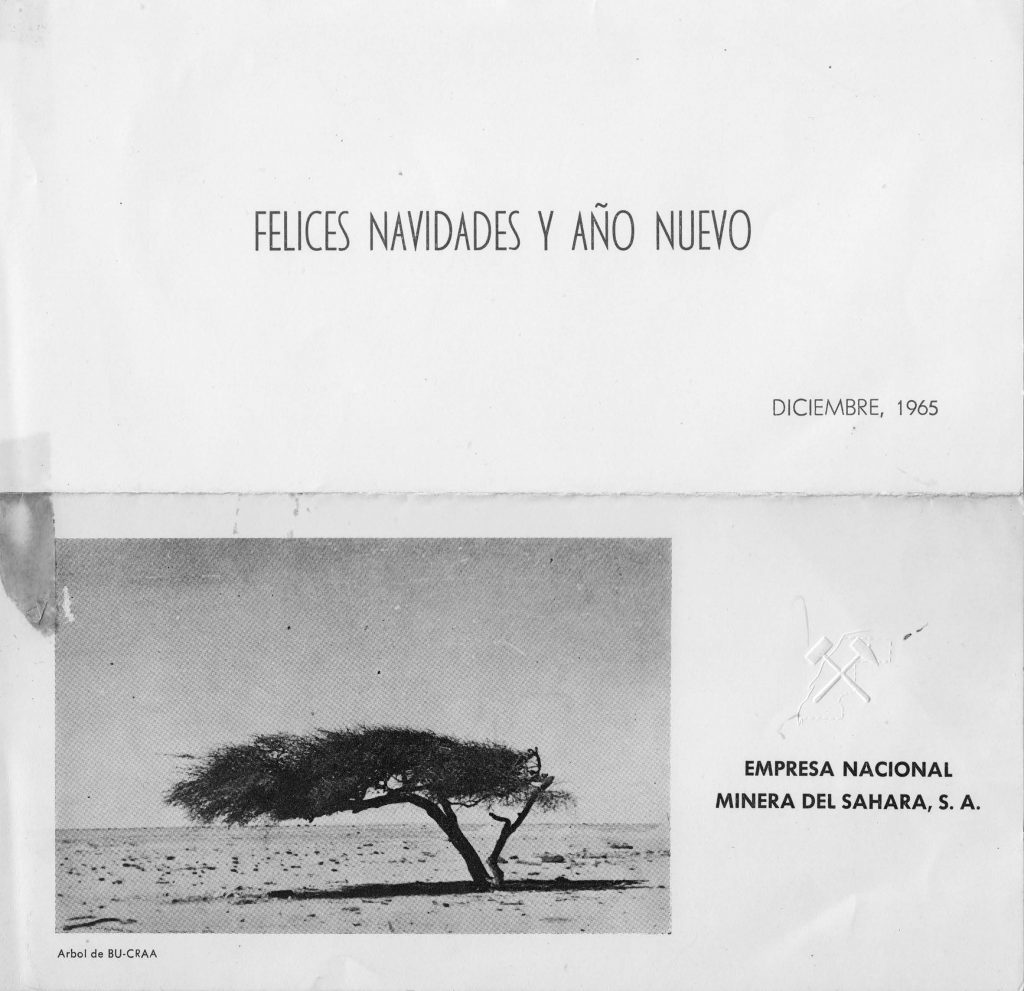
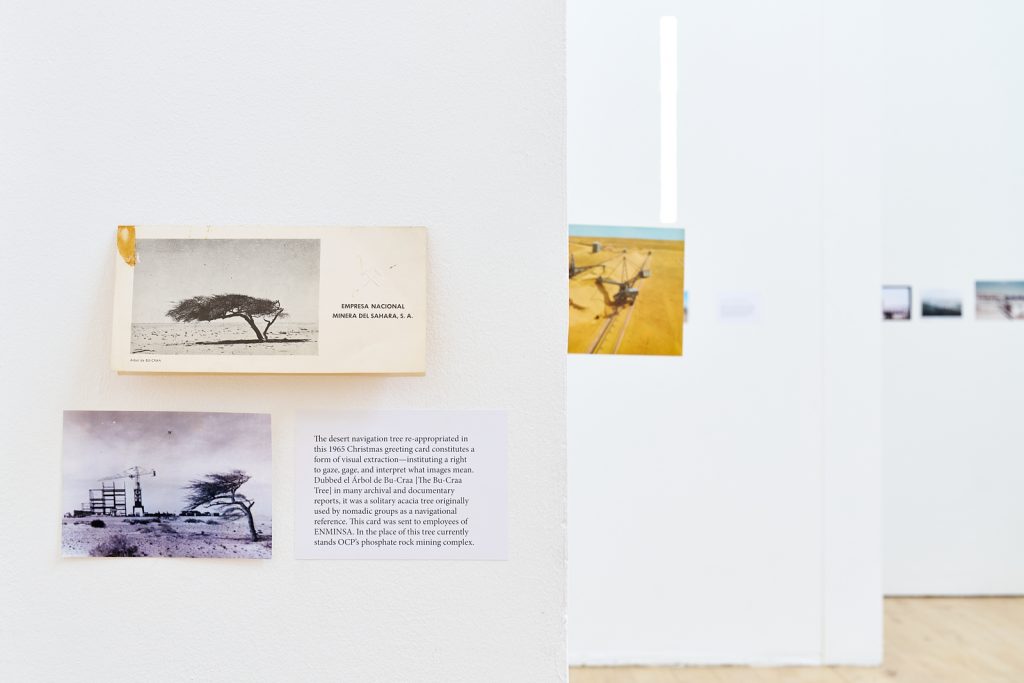
Archival material in the exhibition – An Atlas of P – also examines colonial legacies of phosphate. Included are early prospecting efforts by Spain in occupied Sahara Occidental, which held the world’s most concentrated phosphate deposits. Since 2004, most of materials displayed have been successively classified. Here, the ownership of visuals resources mirrors their raw counterpart. Far from being neutral representations, these images foreground the colonial logic embedded in visual regimes and denounce the historiographical invisibility of extractive architectures in Western Sahara and their enduring impact on land, waters, bodies, and sovereignty.
The river is recognised as polluted by local residents and swarms of midges (chironomids) now populate its banks, however it is also a rare chalk stream which is enjoyed by many: birdwatchers, fishermen, dog walkers, and species such as the Elephant Hawk-moth, Common Frogs and herbaceous plants.
As the exhibition’s consultation programme builds towards an application to the Environment Agency (EA) for part of the river near the gallery to be designated as a bathing water spot workshops, talks, letter writing will take place, together with knowledge exchanges with other groups who have been successful in making such a request. For the duration of the show, the gallery will become a consultation space in which these activities will unfold, to act as a catalyst for collaborations with communities in the surrounding catchment area.
Community-led Public Programme:
We are holding special Hogsmill Community Gatherings at the Stanley Picker Gallery, to agree on initiatives and events to form part of the associated public programme. For more information on the programme of events and how you can get involved, please see our event page.
Credits:
Wearable sculptures and costumes created by Isabel Castro Jung and designed in collaboration with FRAUD.
Choreography by Neus Gil Cortés
Dance by Juan Sanchez Plaza
Glass work by Jochen Holz
Sculpture design assistance Reuben Truman
Programming Mara Karagianni
Acknowledgments:
Rosa Busquets, David Haskell, Sandra Cavanagh, Silvia Padula, Kingston University
Seytkhan Azat, Satbayev University
Joaquín Silvestre, University of Alicante
Sergey Mikhalovsky, University of Brighton
John Leveridge, Aimer Products Limited
Staffordshire St Gallery
Western Sahara Resource Watch
We acknowledge the support of the Canada Council for the Arts.
