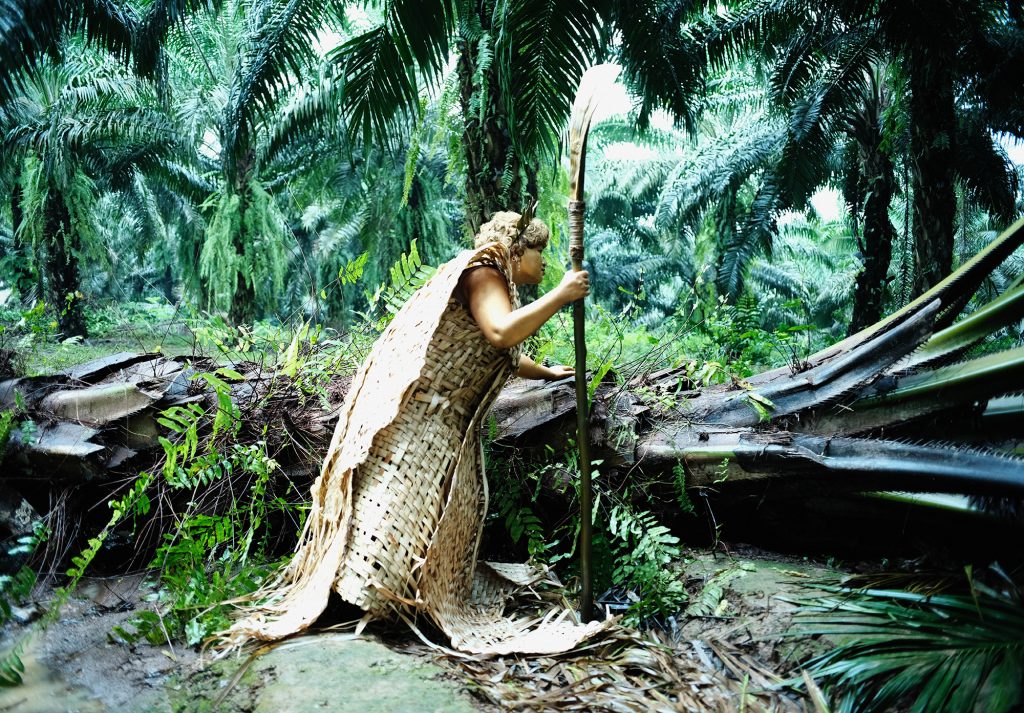
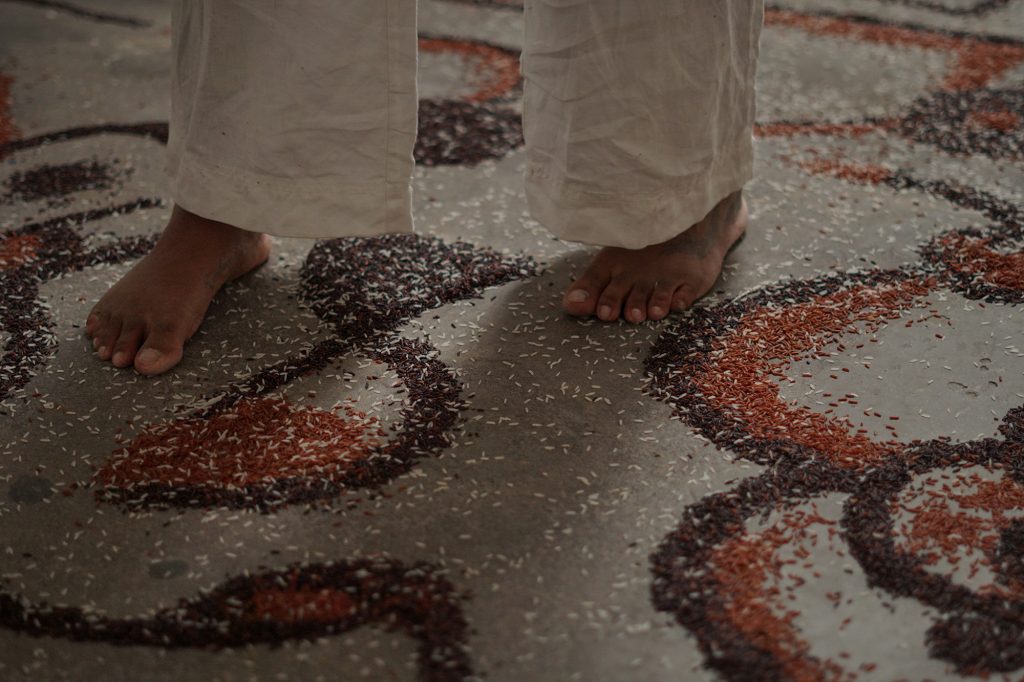
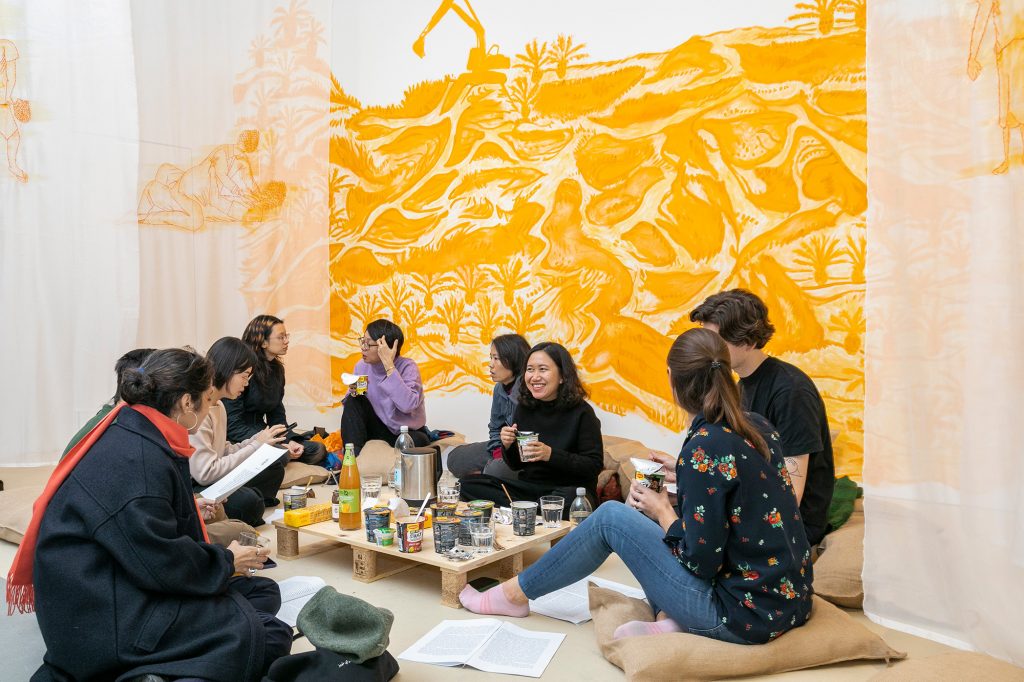
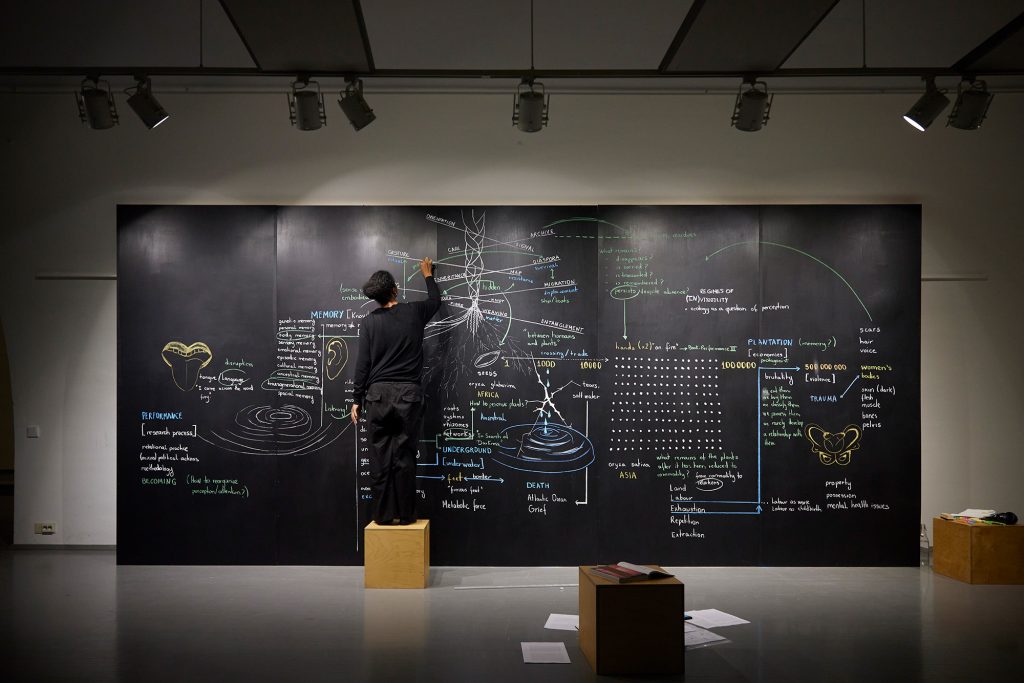
Roots and Shadows is an exhibition at Stanley Picker Gallery which brings together the practices of artists Elia Nurvista and Rubiane Maia whose work both attend to the entanglements of bodies, labour and colonial histories that shape human-plant relations. Extending their research into plants transformed through colonial expansion and imperial trade, the artists trace the histories and contemporary conditions of erasure, cultivation, circulation and extraction surrounding the plants African rice (Oryza glaberrima) and Oil Palm (Elaeis guineensis).
The exhibition is developed from research for a chapter in the recently published Follow the Plants (Onomatopee and Discipline, 2026), and brings the questions raised through their research into correspondence with the gallery’s site as a former a coconut and paper mill with additional contributions from Rain Wu, Harun Morrison, Gaylene Gould, Yvonne Billimore and Clare Qualmann and others.
Together, the exhibition and its public programme ask what an exhibition might make possible beyond the sight-lines, oversight and regimes of knowledge through which the plantation is sustained. Attending to the material and epistemic afterlives of plantation economies, Roots and Shadows considers how artistic research might unsettle inherited ways of seeing and relating, opening space for other rythyms, forms of attention, knowledge and intimacy with plants.
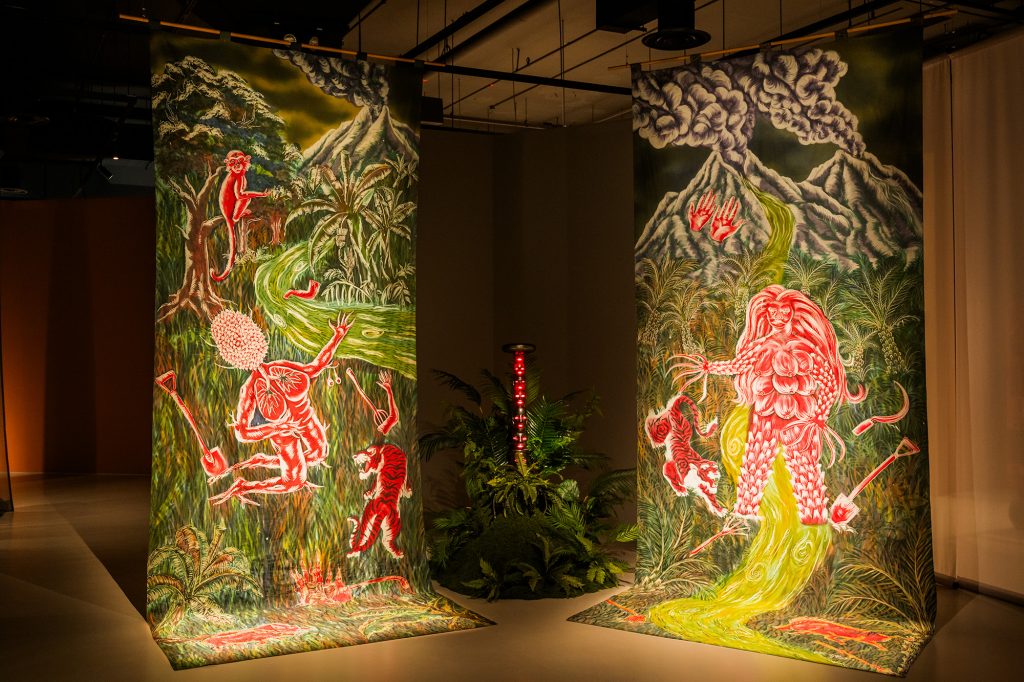
Elia writes: “In Roots and Shadows, I present my film Plantation Tragedy and continue developing Bodies of Penumbra, a series of sculptures made from discarded oil-palm fronds that take the form of fragmented human anatomies, including hands, feet, and lungs. These body parts evoke the physical labour and exposure to pesticides experienced by plantation workers, while questioning what is valued, exploited, exhausted, or discarded within the plantation economy. Alongside these sculptures, paintings made with unrefined palm oil and palm wax depict scenes of everyday plantation life and damaged landscapes. Smoke lingers throughout the installation, as it does in plantation environments, evoking the often-invisible infrastructures of extraction, pollution, and industrial production. Rather than attempting to recreate or simulate actual plantation conditions, this staging explores how smoke can become a material presence that obscures, reveals, and unsettles our perception of these interconnected systems.”
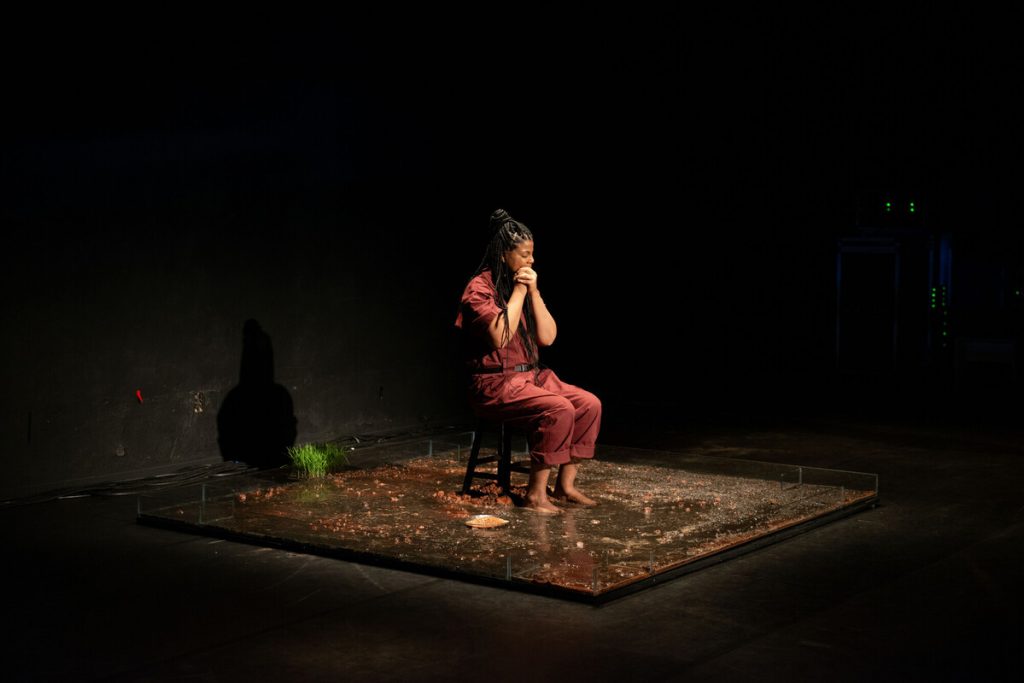
Rubiane writes: “Alongside my research for Follow the Plants, I have been returning to darkness as a fertile, metabolic space, a field where life, decay and transformation remain in close relation. Among Voices is a sonic lament that emerges through my intimate encounters with this subterranean space, when the body comes into contact with what usually lies beneath the surface of everyday perception. It moves through breath, through vibration, through the friction of bone, flesh and voice, touching registers of experience that are difficult to name but deeply felt. In this atmosphere, roots become important presences: hidden networks moving through skin and soil, enabling exchange while carrying memory and decomposition. Lament belongs to this threshold. It travels across bodies and materials, between human and more-than-human life, as a resonance arising from the shared conditions of being alive and witnessing death.”
From 18-20 February, the Gallery will host a Follow the Plants Research Assembly, extending the exhibition into a programme of collective study, performance, walks and shared meals. Bringing artists, researchers and practitioners together, the assembly creates space for situated exchange and collective forms of knowledge.
Thursday 18 February 12-4pm
A Follow the Plants Study Day an open call for researchers to bring plant research, migration stories, and shared questions to an event that puts these stories in correspondence with the exhibition and to open up a wider enquiry about following plants towards practices of resistance
Friday 19 February 5-8pm
Stanley Picker Gallery Late with performance, food and offerings from Elia Nurvista, Harun Morrison, Rain Wu, Rubiane Maia and Yvonne Billimore.
Saturday 20 February 11-1pm
Walks with Mahonia, walking artist Clare Qualmann leads a collective exercise in sense making and orienting around the gallery attending to the plants that inhabit the edges, boundaries and overlooked spaces of urban Kingston, the walk asks: what grows in the grey zones and in-between places? What has been planted as a (de)fence? Which plants have travelled from afar, and what histories do they carry?
Saturday 20 February 2-4pm
Sharing what remains with Elia Nurvista, Rubiane Maia and Madeleine Collie – join for a discussion on diagrams, film making, forest ghosts and practices of collective resistance to the shapes of knowledge dictated by the inheritances of plantation.
Roots and Shadows forms part of the wider Follow the Plants research project developed by Madeleine Collie and Yvonne Billimore, which explores plant relations across cultural, ecological and political contexts. Developed through the Food Art Research Network in collaboration with Bioart Society, this iteration of the project is supported by the Finnish Institute in the UK and Ireland, ACME and Fluxus Curatorial Research Grant.