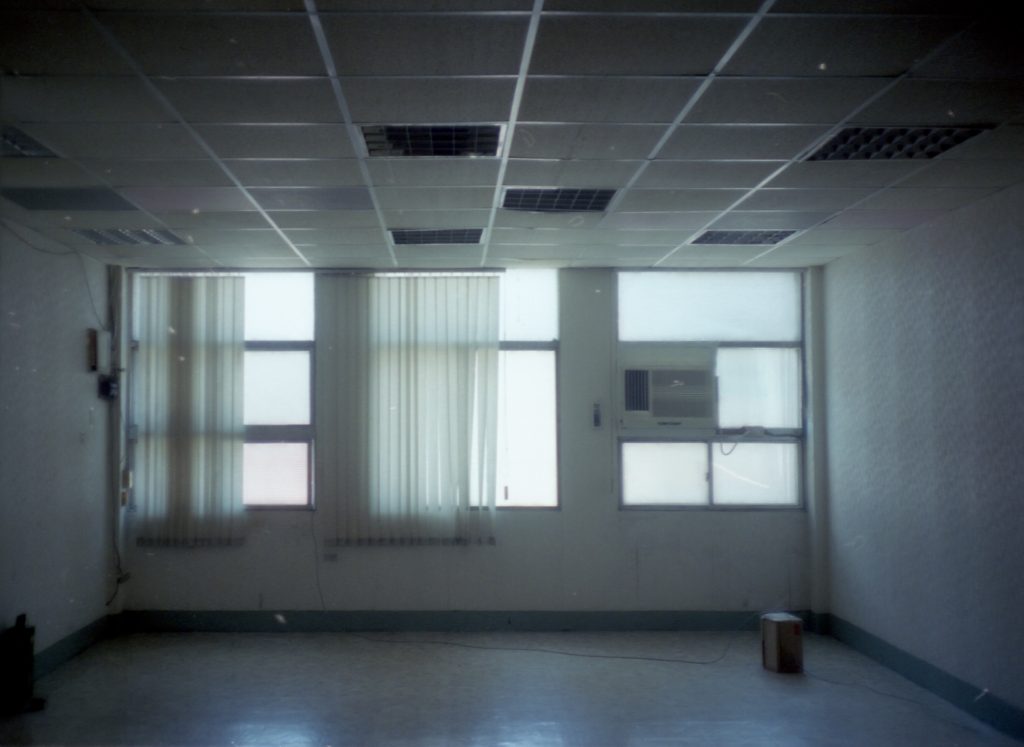
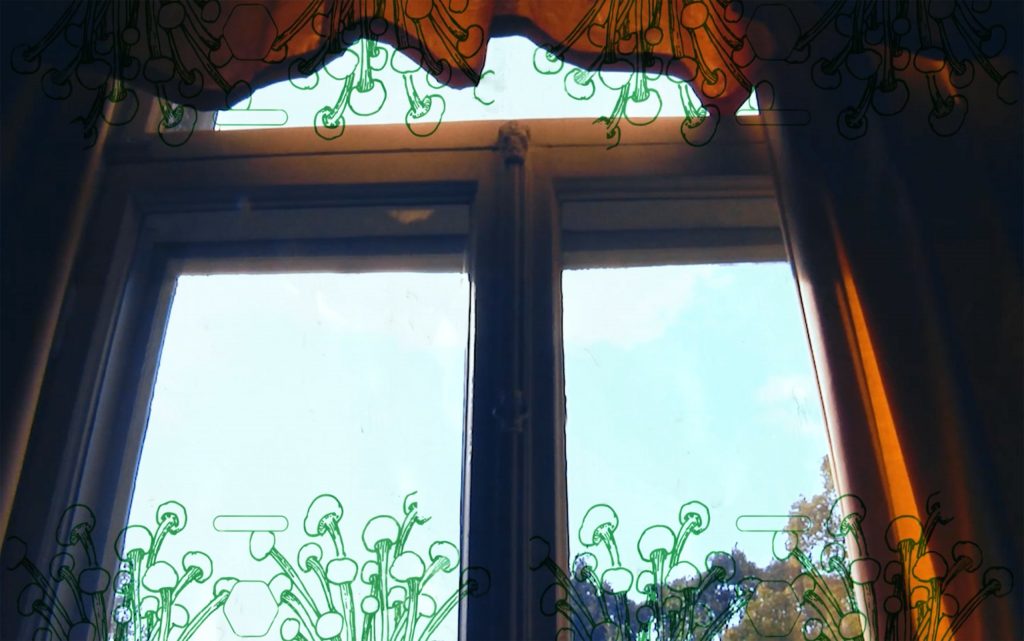
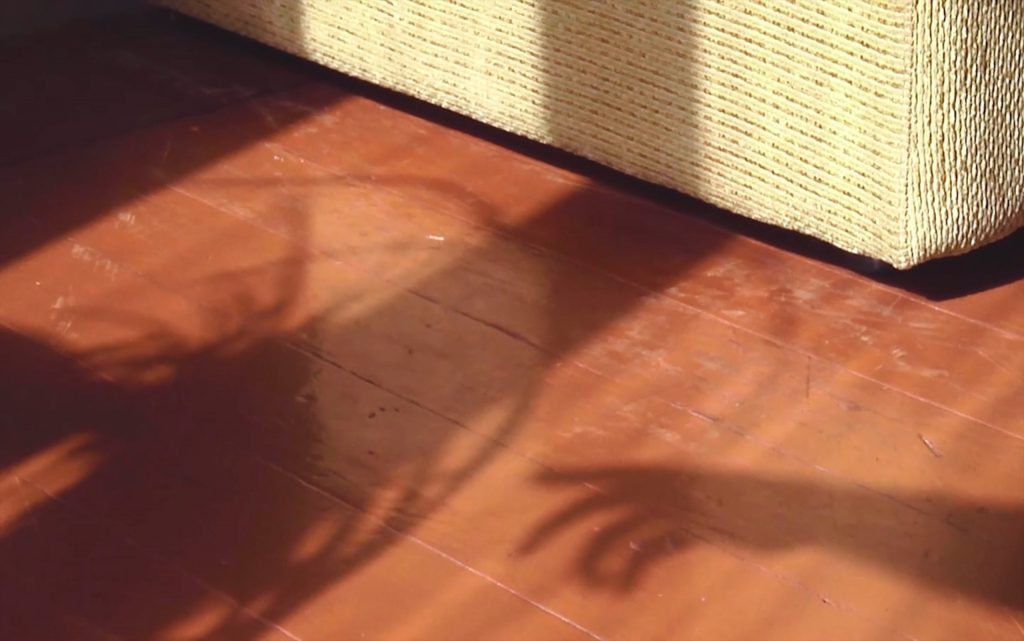
I laid wide awake in a corner of Villa Eläintarha. The sun seeped in like golden syrup. Wayward dust drifted among light rays leaking through heavy amber curtains. In a room nestled on a rocky hill overlooking Töölönlahti Bay of Helsinki’s Hakaniemi neighborhood, its opulent stove and solemn wood furniture thick with memory, I waited through an endless night for a break from its phantasmagoric stillness. My ears were ringing, my heart beating out of my body from the excruciating silence. Day had finally come, yet the shadows that lived within the 19th century manor refused. It warped and writhed its wooden bones and wallpaper skin in contortions as if laboring its last breaths. The light I longed for only confirmed the unsettling presence I felt, even though I was the apparition disturbing ghosts I could not name.
In the residencies I have experienced, both those I have been invited to as well as stays I have organized with the support of research grants, the primary place of work is the site of residence. This site is a complex marked by multiple intersecting positionalities and agencies of the resident, residence, residency, institutions, juries, cultural attachés, and nation-states. Also part of this knotted arrangement, though often as the subject of inquiry, are local marginal communities and other inhabitants, and the multiple histories they carry—or, the rest1. They are residues that are not taken into account, those that reside in a place but are refused the status of resident and denied political recognition and agency.
In contrast to traditional residencies that might provide access to a studio, workshop, or office space, design- and research-based residencies have provided only housing to meet all of my everyday needs, including that of work. Consequently, this room and temporary home collapse any imagined separations that may be left between private and public spheres. All of life lived and all labor performed throughout the duration of the residency is occupied by work.
Residency accommodations typically have the usual furnishings of a room of one’s own: a bed, a desk, a chair, a door with a lock, a key, some money, and some level of independence. They intend to offer a private sphere, a domestic interiority that may serve as a temporary refuge from the pervading exclusions of interjecting social structures and social formations that lie outside beyond its walls—a break from everyday life. They offer a modest separation from our selves as constructed within these exclusions, a time and a place that partially sidesteps the facticity of one’s conditions, entering a different context that dislocates one’s place. The room’s material location is the potent ground of the residency as workplace; however, the short duration of these exchanges limit the capacity of residents to deeply attend to this new location and its conditions.
What seems important may simply be the fact that the room is located elsewhere, within a suitable program or institution, a supported retreat from which to continue one’s work, arrange meetings, make plans, gather materials, and exchange practices. For me, displaced from the contexts and conditions within which my work makes sense, haunted by unnamable specters of unfamiliar histories, I am confronted by profoundly dis/re/orienting residues that refigure what my work is, and what my practice might become.
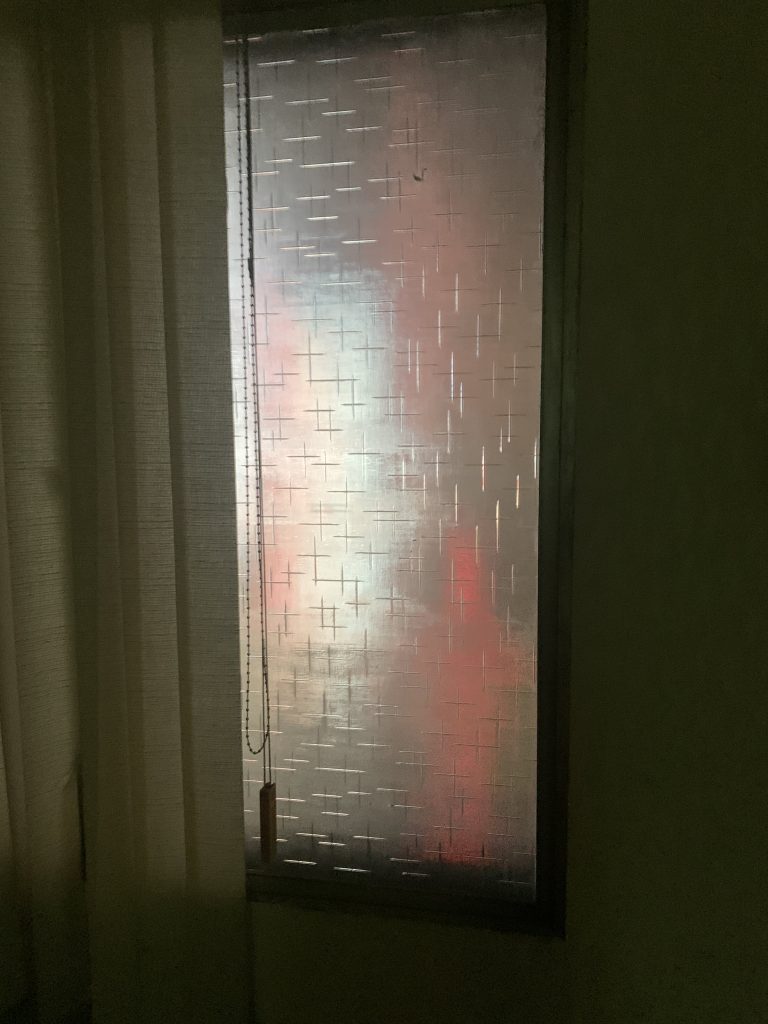
My gaze anxiously wandered, suspended within the pink mosquito net. The fluorescent blue light emanating from the mosquito zapper in the corner forced shadows to dance with wavering certainty. In between the occasional passing motorcycle, I listened for movements in the air, eyeing the net’s closure, hoping I didn’t leave a gap. As I lay there, on a bed in my father’s childhood home in central Taipei, in the middle of the emptied second floor from which my grandfather’s business imported metals from Japan for electroplating—not yet adjusted to the local time and the multiple temporalities this home inhabits—I was feeling that particular exhaustion that leaves one’s body pulsating. I turned to my side, hoping to shake it off. Shop signs flashed through patterned glass, illuminating the last remaining desk of the emptied-out office. I remembered how I used to watch my grandmother walk around this room in circles, swinging her arms, massaging her knees, pausing at a half-open window to watch the world leave her behind.
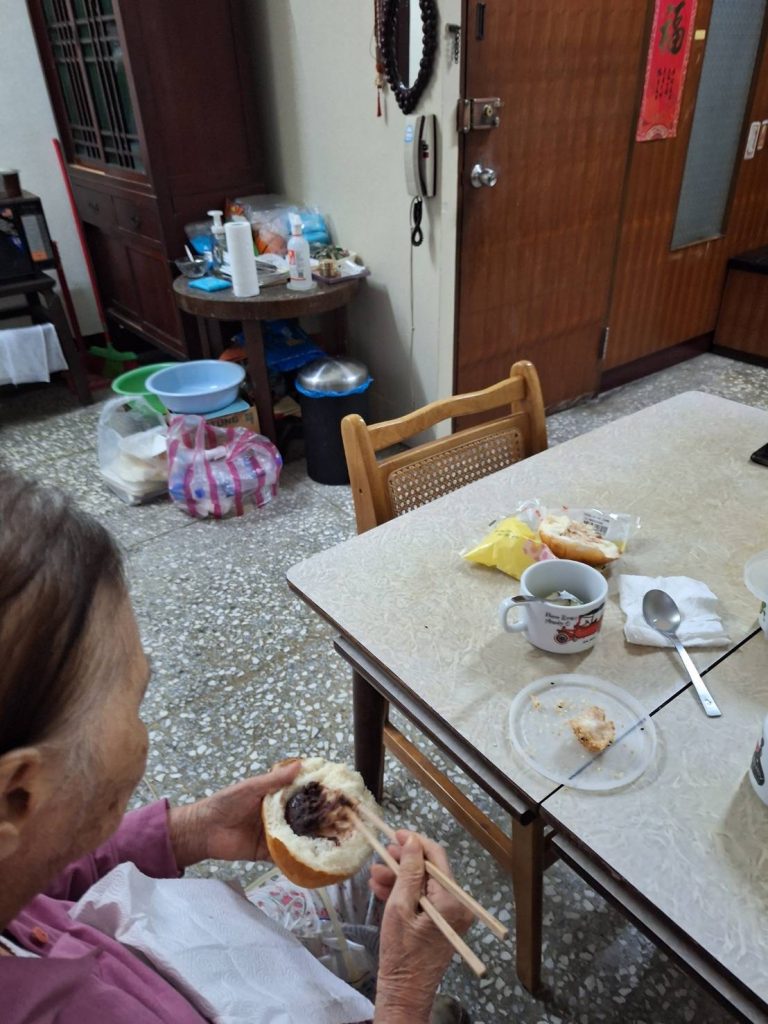
I don’t know how long I lay there awake, or maybe I had been drifting in and out of restless sleep, but I began to notice increasing noise from the street below. I tried to open my eyes, but they were glued shut by some dried secretion. The doctor said my red-eye sickness might have to do with the increasing pollution migrating across the Taiwan Strait. Matter knows no borders. I heard sounds of plastic slippers slapping against the dusty terrazzo floor above. In this house everything always felt dusty, sedimented with the kind of residue that doesn’t wash out. My grandmother’s migrant, live-in care workers were already at work, day after day tirelessly cleaning the worn-out bathroom floors, doing the laundry, preparing breakfast in an inhospitable kitchen, and helping my grandmother up from her bed, half shouting so she might hear through her failing ears. They assisted her with her regular morning routine: walking back and forth four times across the living room, sitting at the kitchen table to play a game of kick, and then a game of catch with an inflated ball, and feeding her breakfast, begging her to finish the last bites while she refused and huffed and turned her head this way and that, pouting her lips like a child.
As a resident, whether I am resting in a temporary home, or amidst the pleasures of forming odd kinships in the surround, or gathering in the joys of making good trouble with others further afield, I cannot escape from the occupation of work. Nor am I released from external and internalized expectations placed upon me as a privileged culture worker financed by a knotty complex that desires cultural capital and knowledge production. My clumsy inability (and perhaps even partial refusal) to claim or secure any settled location as I drift about here and there induces further confusion; this, however, doesn’t mean I do not locate myself. I may have spent my childhood in California, but I am located somewhere in the unsettled ruptures between the US, Taiwan, Sweden, and wherever else I happen to be or pass through—the multiple histories, relations, and voices within which I am held2.
I do not let myself forget the ease with which I move across borders. Though my residence status in Sweden where I live now may be unsettled, my unsettledness is not stateless. Even amid multiple dislocations, my papers have afforded me privileges many are denied. In residence, haunted by my positionality, thoroughly occupied by the compulsion to work, possessed by the urgency to bear witness to life, condemned to my body and its unsettling movements, the politics of location becomes the actual site of residence. It is a struggle of movement, of language, and of practice, in this body, among these worlds—a struggle for accountability3. As a temporary resident, I am also a tourist. I strike up conversations, ask for recommendations, visit museums, browse markets, journeying through neighborhoods in search of quieter histories, community resilience, and beauty4.
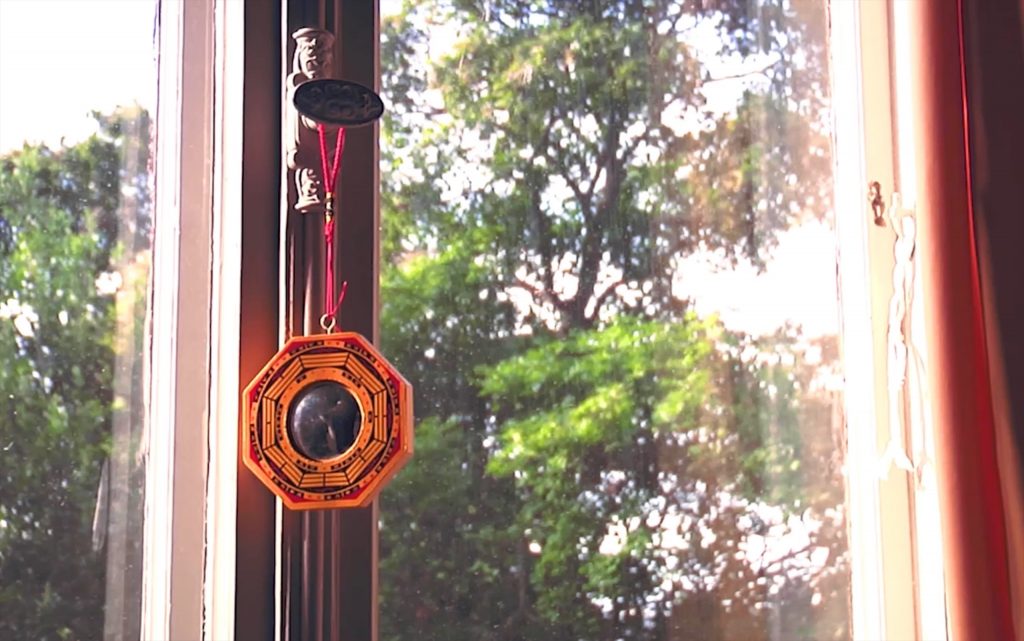
I awakened to the sound of a thousand mu’azzin reciting the Adhan. My hand instinctively reached for my phone. 5:20 AM. Thousands of loudspeakers echoed thousands of metalline choruses, as if I was held between mountains and monuments, each voice reverberating into my room through the closed window and half-drawn curtains within the high walls of the Swedish Consulate palace at the far end of Istiklal Caddesi (Independence Avenue). Walls are more porous than we choose to believe. Outside always finds its way in, even with all the doors and windows shut. I glimpsed dawn peeking through the trees, gently closed my eyes to feel the light break, and let go of my wavering breath to inhale the morning blue.
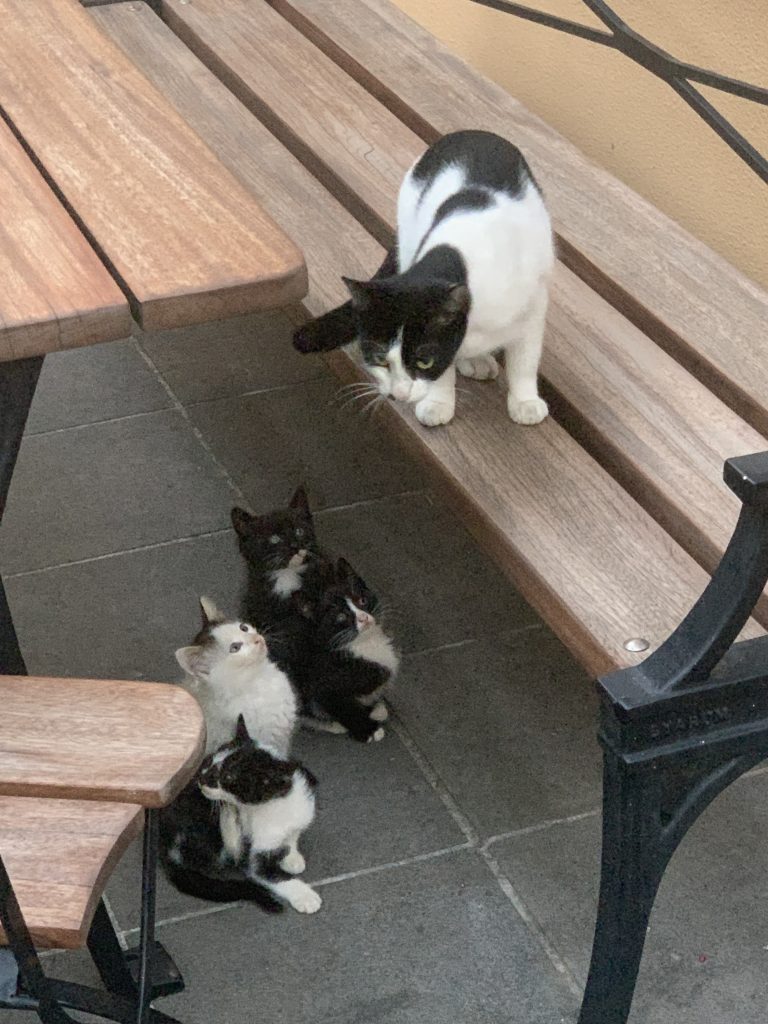
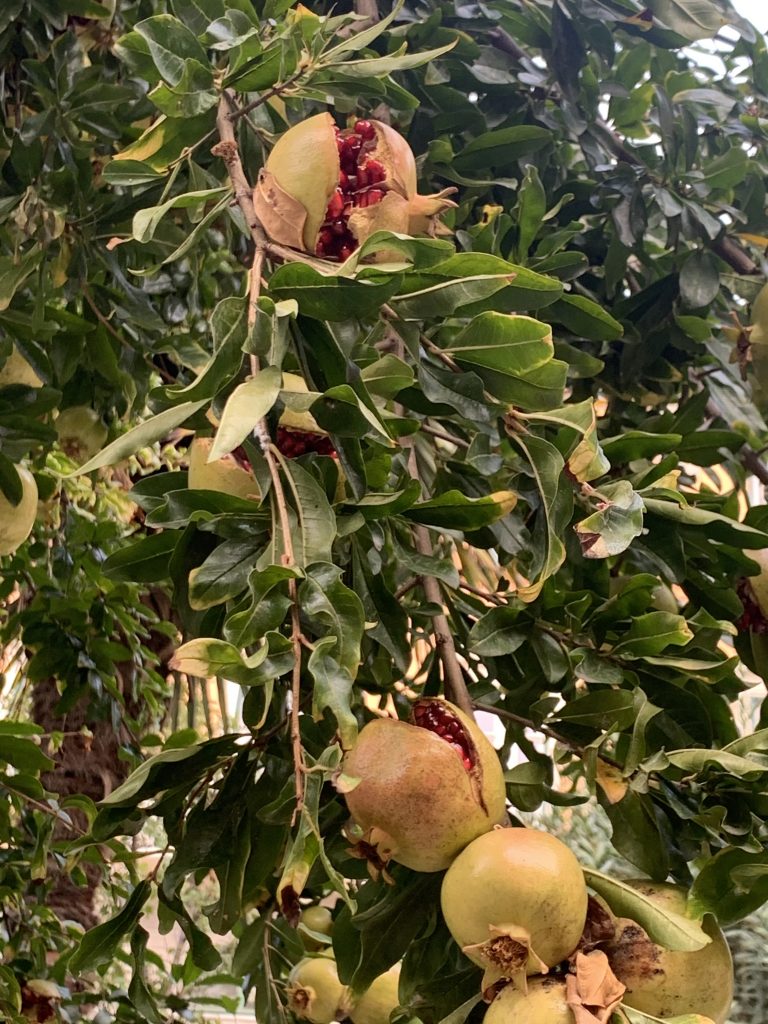
I just stood there for a while on that annex balcony. I thought about the new litter of kittens trembling under the bench in the garden. I remembered the yellow pomegranates still hanging from the trees along the cobblestone path below, already bursting vivid red under a giving sun. I could already imagine, as I had seen the day before, and the day before that, the unmarked charter buses full of police, some standing just outside the gate equipped with bulletproof vests, riot shields, thick helmets, and submachine guns, while some loitered on the street corner smoking cigarettes, watching the city with anticipation. Someone whispered to me that nationalist fundamentalism will likely win; it goes without saying really, since we’re all still asleep during prayer.
As I came and went in and out of the annex building, to buy groceries or go for a walk, I smiled at the middle-aged couple who cared for the house. They were usually at the dining table in the front room, sitting for a moment to watch their shows after preparing a two-tiered pot of çay. The tea filled the austere home with its mellow, earthy aroma. I didn’t know any Turkish, but I greeted them in whatever ways I could. I was a resident in their home, using their kitchen, borrowing their laundry machine, wearing my shoes on their carpets and in their hallways as everyone else did. Just like Ukeles, I cleaned and cooked and did laundry. Just like Ukeles, they also cleaned and cooked and did laundry, and then continued on to mop the floors, refill the drinking water, wash the windows, refresh our rooms, take out the trash, sweep the front steps, and make more tea. Payslips documented their work; the agreeable security guards watched from their cameras. They all also wore their shoes inside. Of course, it wasn’t their home either, but Swedish state property. We all received wages for the housework we did to maintain the consulate complex.
The domestic sphere of research-based residencies collapses production and reproduction, public and private, echoing what feminists have known all along: maintenance work is just as necessary as any other form of labor5 6. One no longer leaves the factory to return home. Home is the factory. The contemporary exploits this latent market. Products commodify insecurity, media manufactures consent, outrage subjugates our attention, extracting the whole earth through 24/7 material and immaterial labor that began before anything was born and continues after everything has died. Domestic interiority can no longer be imagined as a private retreat from our turbulent world. Private and public are both illusory and real. Even among sustained traces, both past and present are subject to constant change. All our work and all our labor, even the faintest scent of tea or a half-open window, contributes to this cacophony of worlds, whether reproducing this one, or nourishing the next.
When I returned from my daily walk around Hakaniemi, the midday sun had completely animated the room with a vivid vibrancy. I opened the windows wide to let it breathe. Particulates drifted in with the errant breeze, mixing with dust and other living matter. I set down the plastic bags of groceries I bought from the nearby shops that serve multiple Asian and West African communities. I caringly laid each familiar item on the floor as if an incantation: a bag of dried chickpeas, a bag of dried black-eyed beans, Maggi bullion cubes, fermented black bean chili oil, Mi Goreng Indomie instant noodles, Korean black-bean sauce noodles, Turkish peppers, Spanish tomatoes and garlic bulbs, a tube of harissa, a small bottle of tsuyu, Vianco curry powder, cassava chips, four different kinds of senbei rice crackers, dried mango slices, a can of sugar-cane juice, a can of guava juice, Sina ginger candy, Haw flakes, a tin of Sakuma fruit drops, a pack of incense, and a few stacks of plastic-wrapped joss paper—in case any ancestors were watching.
I arranged everything into a tapestry at the front of the room as an offering or a protective ward. Despite their hermetic seals insulating from the threat of entropy, the air began to change. Biting, bitter, sticky-sweet, earthy vernaculars gathered, unsettling the sedimented residues of stale heritage, its ghosts and all the rest dancing to the sound of the memory of many living people7.