PART I
Peaks of mica kept watch over their long marches. How could these panoramas be rendered credible? There were too many sides; the cubes had extra faces.
The company of volcanos gave the sky interiors.
– César Aira, An Episode in the Life of a Landscape Painter
(Translated by Chris Andrews)
- An Opening Dialogue
We begin with a consideration of the word “residency”, a term that we struggle with, particularly as related to our After School program, 2023-2025, which had two “residencies” as part of the larger one-year program. “Residency” has wide currency, and there seems to be an unquestioned transparency when it is used as a term to describe what anybody is doing. For us, it’s actually an opaque term, one that papers over the many different, sometimes contradictory, practices that it describes. It also carries strong political and cultural connotations related to the question of place. Residency is, of course, tied to the idea of residence and resident; privileged statuses in a world where large numbers are expelled and un-homed.
The Center for Arts, Design, and Social Research (CAD+SR)’s projects, including the After School, convene researchers from diverse geographical locations, cultures, histories, ages, genders, sexualities, practices, and means, and whose other affiliations and identities compound the community’s complexity even further. “Residency” does not capture that defining complexity, which extends far beyond CAD+SR’s own projects. It is spatially and temporally extended, and fundamentally characterized by a play of differences. Indeed, our first five years of residency programs were aptly named “Commonplaces and Entanglements”, invoking the words of Édouard Glissant, whose insights on errantry, the poetics of relation, and opacity inform this work (Glissant, 1997).
The recent After School convenings in Nairobi and then later in Laikipia, in the rural, central part of the country, produced a range of important questions about the Center’s practices in relation to the interplay of place and architecture in our, as one recent researcher named them, “social sculptures”. For the many researchers in our community who had never been to Kenya–or Africa–particularly Europeans and North Americans, it is a place that elicits strong impulses and emotions. For example, visitors may have multiple, intersecting, and contradictory political causes for which they may feel compelled to give voice, without recognizing the endemic problem of overdetermination that codes not only Kenya or Africa, but really all places, with signifiers of race and privilege, and history and colonialism, just to begin with. It is very hard for some to disentangle these in regard to a specific place and its complex particularity. These structuring discourses are taken for granted, generally unthought, and instead are felt in deeply affective ways as just knowing. The overdetermination flattens complexity, regardless of political ideology, “left” or “right”. The built environment and interior design can function as excellent texts for reading these complexities. But they must be framed precisely and consistently as such; otherwise, a faux-indigenous “village” and a modernist hotel go unremarked as sites for critical interrogation, but another, a “castle”, becomes simply “colonialist”. Varied cultural phenomena are reduced to simplistic similitudes, with this or that “just like” or “not at all like” where “I” come from. These comfortable frameworks of understanding are often defended as unique insights.
This loops back to the notion of residency. Does the term simply obscure tourism? It is language that may, at least partially, dodge the charge of tourism by enabling a special type of visitor, but one who is, like a tourist, privileged to categorize and name according to preconceived notions. What concerns us is the question of activating the play of difference that is constituted by those who convene in our gatherings, organized at different places across the globe, always in collaboration with situated people and organizations. And that play of difference is what tourism avoids.
How to propose opacity as the actual term of exchange and basis for sharing and creating new knowledge–acknowledging that there are things we will never know about each other, or about this place; yet, we can nevertheless still nurture complex communication and coalition? The recourse to overdetermined meanings obscures opacity, creating false intimacies and transparencies. We are understanding opacity here with Glissant’s elaboration of it as a fundamental right and a necessity for the ethos represented by the “poetics of relation”. With the phrase “complex communication” we point to the work of decolonial feminist philosopher María Lugones. Lugones elaborates it as the way out of acquiescing to understanding ourselves, and others, according to discourses of domination. She writes from and through a life lived in radical educational work and consciousness-raising with women of color in the US, seeking to understand how we can build coalition. While affiliation to various forms and expressions of identities and communities of resistance to domination is necessary for survival, these affiliations may also be “thin”; they may not provide a “thick” sense of oneself or other oppressed people. It is only “complex communication” that will enable the oppressed to see each other’s worlds beyond both what the oppressor sees and how we see ourselves in the world of the oppressor (Lugones, 2006).
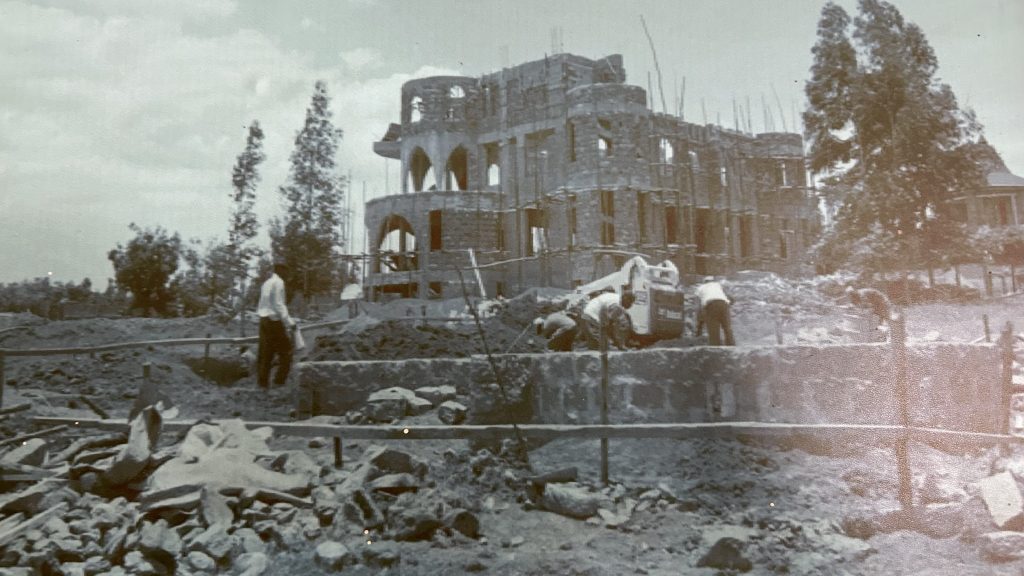
To return to the question of a castle, Tafaria Castle and Arts Center in Laikipia was designed as a re-imagined castle; one that is for the people of the locality, not fortified against them, through arts and culture programs, including a year-round artist-in-residence program; a natural history museum; and an herbarium and farm. As a social enterprise, its business model includes hosting guests, including school groups, university conferences, and corporate retreats, in its hotel and restaurant.
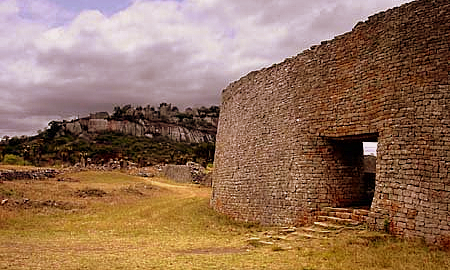
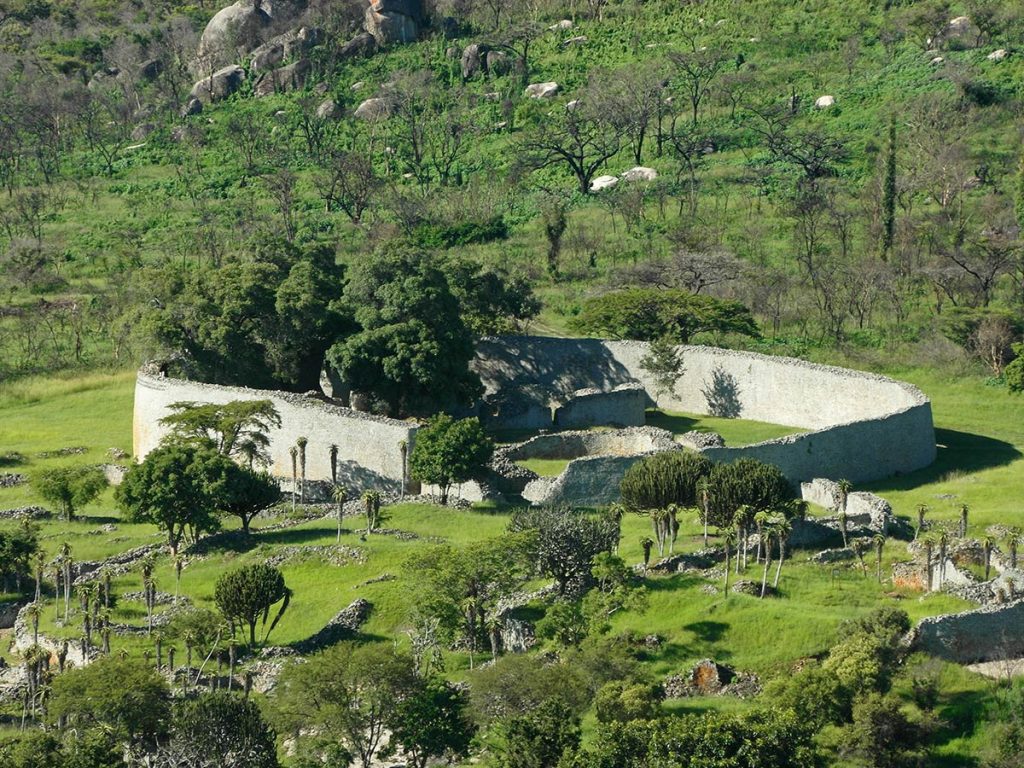
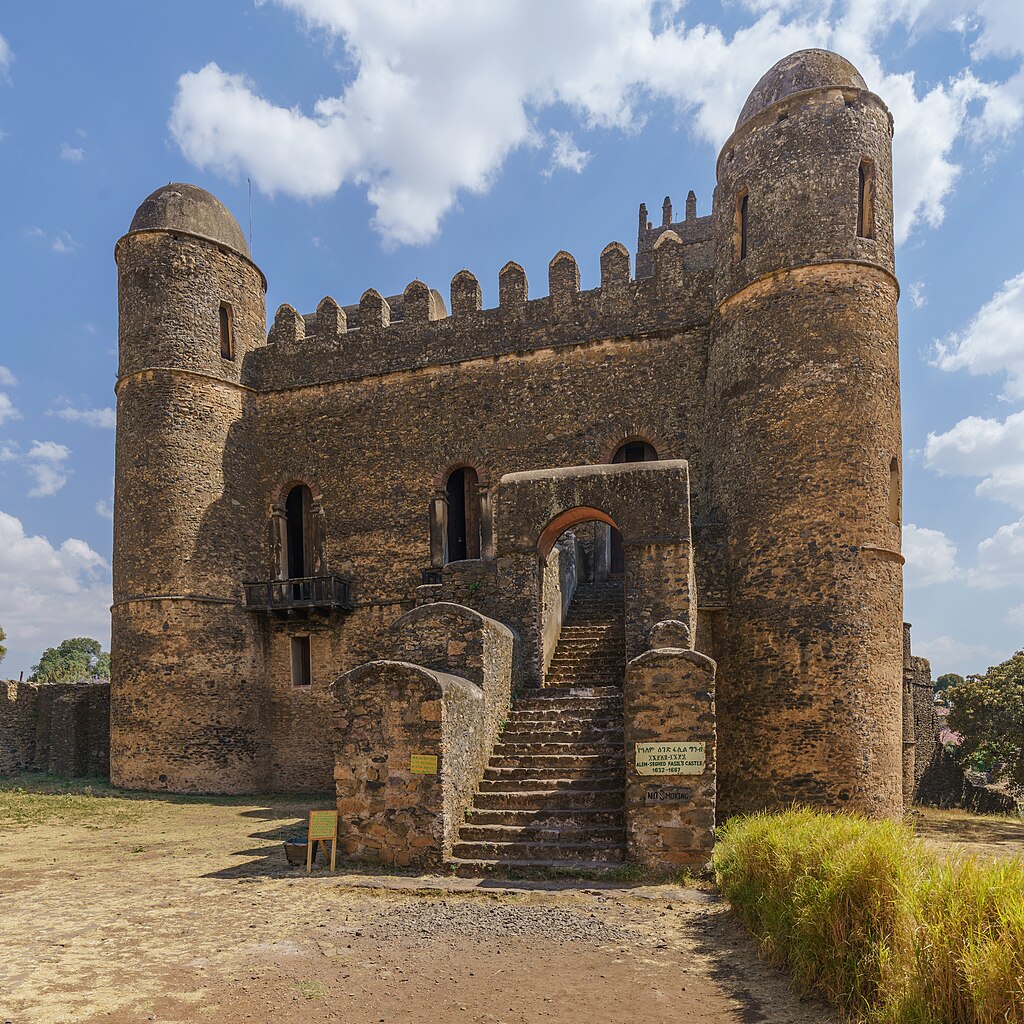
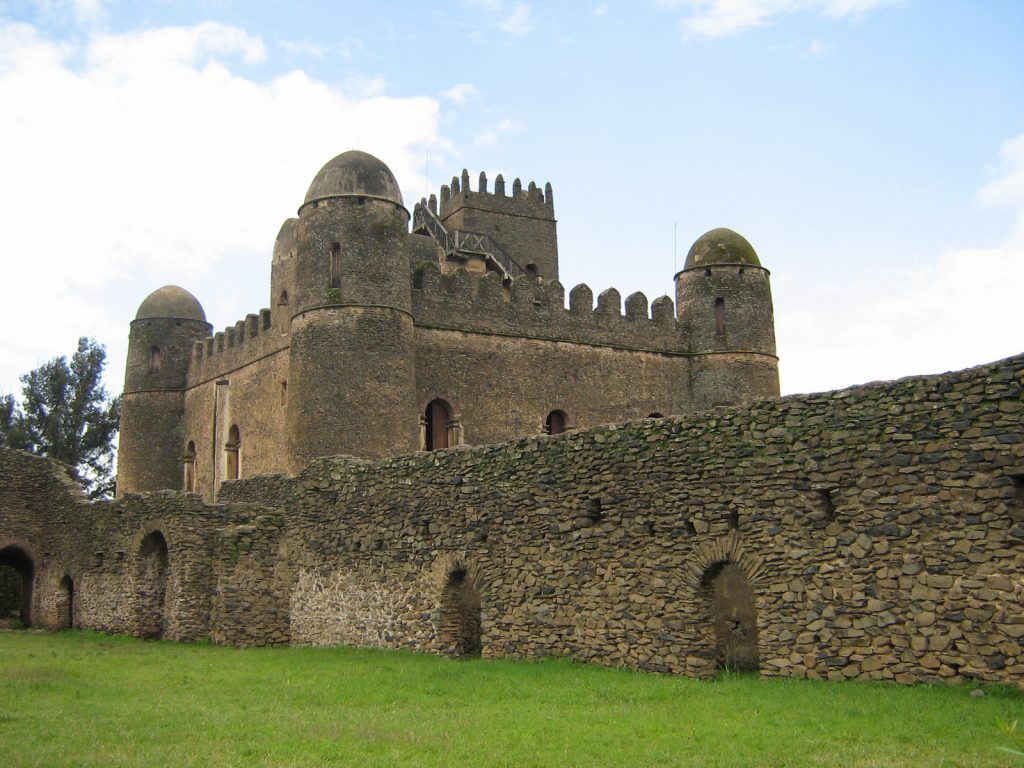
We held two residencies there, in late October and early November of 2024, and had two entirely different experiences of the castle’s architecture in each. In one residency, it provoked the striking reaction among some members of the research community that the castle was nothing but a further instance of colonial occupation and extraction in Kenya, including its hospitality business constituting it as a capitalist enterprise that elided, rather than supported, its other commitments. Simply based on the historical record, this unfounded conclusion ignored the long and complex history of Africa’s visual and material cultures and architectural histories. Diverse African cultures across the vast continent have built fortified towns and cities, “castles” across all regions, dating to the earliest human communities. While these provided protection through a concentration of people and resources, they were never exclusively defensive constructions. These were also points of exchange, articulating trade routes and linking diverse people, ideas, resources, foodways, and cultures.
Laikipia is a region dominated by white landowners whose private ranches and reserves reach sizes as large as 100,000 plus acres. It is a site of British colonial consolidation of power, and a laboratory for forms of cultural, economic, and political oppression during the colonial period. In the post-colonial period, forms of coloniality continue, as these ranches and reserves increasingly exclude the pastoralist communities whose historic grazing lands have been blocked or entirely closed through conservation schemes, which privatize and enclose formerly common lands, even if under the guise of the public good. In this context, Tafaria stands as an important institutional alternative, a Black Kenyan-owned project that programmatically engages questions of culture, education, and international connection for local and regional communities.
Tafaria also represents the intrepid spirit of its founders, George and Eunice Tafaria. They remain visionary leaders and co-designers of the ongoing unfolding of the spaces of the complex, which began with an outdoor amphitheater in 2009, which they imagined as a site for screening films and hosting cultural performances and workshops for local children. George writes:
Initially, we collaborated closely with architects and engineers to shape the vision of the castle and center for the arts. However, as the project evolved and we overcame the initial design challenges, we transitioned to leading the design process ourselves. We now only involve engineers when specialized structural and technical expertise is necessary. This shift has allowed us to be more exploratory in our design approach, pursuing an organic development of the structures that can adapt and respond to emerging client needs and visions (G. Tafaria, personal communication, September 10, 2025).
The interior design of the castle is always in process:
The interior architecture is entirely bespoke and striking. The design process was progressive; we did not start with a predetermined design or master plan… This has been an intense process, as we often work in spaces that are in use, which means we work odd hours and rapidly. The collaboration involves fine artists, painters, carpenters, sculptors, and ironmongers. At any given time, our team consists of approximately ten individuals working on the interiors, fostering a highly collaborative environment (Tafaria, 2025).
George grew up in Laikipia and shared with us during the residencies that the image of the castle derived from his childhood: When he said he wanted to become a successful businessman and contribute to the economic and cultural progress of the area, he was told to stop building castles in the air.
2. A further reflection
Is it time to leave the term “residency” behind, implying as it does the legal status of resident, even if a residency is a year, even more inappropriate when used to describe programs of a few days, weeks, or months? At best, residents are guests, albeit still subject to the global structures of tourism, its privileges, and its logic of exclusion. Arts and design research residencies to which people travel sit in this uncomfortable relationship to tourism. Each is in danger of making its complexities and contradictions invisible, beginning with the language it uses; perhaps selling authentic experiences populated with real people, perhaps even claiming to dissolve the space between the traveler and the people they encounter. It may also frame these experiences as fundamentally transactional, between seller and buyer. Authenticity is likewise a possible expectation of the “resident”, who seeks experiences and knowledge that are grounded in and unique to a place and only available to them due to their privileged status.
There is no amount of information that can, or should, dissipate the fundamental opacity of all places. One cannot become of a place by reading about it. Guidebooks are predicated on the false promise of making a place transparent and available, but in fact perform a further obfuscation, a culturally specific map to compel certain routes. Likewise, the more specialist histories, political economies, geographies, and other critical texts, while useful in their methods, detail, and complexity, are still only fragments of an elusive whole.
To acknowledge this opacity as a form unknowing, and make it central to a convening, requires actively rethinking our relation to a place, beginning with a deep questioning of our reactions, carrying as they do all the unspoken stand-ins for knowledge in the form of prejudices. This is what we think we know; ideas formulated by the cultures we are subject to, but experience as our own. Commonsense provides a shield of familiarity against the unknown, a simulacrum of understanding that frames people, places, and actions. It is experienced as manifestly correct, even though it is at best, a distortion. To recognize these pre-judgments and the role they play in the ordering of each of our worlds is the first instance towards unknowing. It is an opening, one that requires a forgetting of what we think we know towards the goal of learning and knowing otherwise.
In thinking of a new, more appropriate language than “residency” to communicate our convenings, we open ourselves to the new terms, understandings, and relations built in the places we gather: an emergent translocal language of critical resistance. Race, class, gender, queer, and post- and de-colonial are terms that have very different histories and valences for artists, designers, and thinkers at various latitudes and longitudes. We embrace the knowledges these terms represent and acknowledge the many other nuanced namings, markers, and practices shared in our research communities. We use translocal, to point to work under or around national boundaries, but this is also not the only possible term.
3. The Dialogue Continues, with Opacity
Let us continue to consider the role of opacity. Several months after the residency in Kenya in which the castle became a capitalist fortress, there was a demand from some participants for more “transparency” regarding the finances of the program. It is significant that this occurred after an engagement with a particularly complex, thick space. As if somehow, numbers would explain the intercultural layers and intersubjective challenges of our time together.
It is a reminder no project can happen without money; an uncomfortable truth, and one which resonates with the question our colleague Dr. Oduor Obura asked in the dialogue, “Brittle Cosmopolitanisms”, that he co-organized with us at Munyu Space in Nairobi, November 7, 2025: “How to be together when there is gross inequality?” Money, of course, is one of the more present manifestations of inequality both within the group and in the places we work. We attempt to socialize fees, asking participants to pay what they can. Some pay the full fee, others nothing, others some amount. Who can afford what, when our communities come from the richest countries and the poorest countries and everything in between? These are political questions. How do you enable a community, a diverse international community, with the fact of the global divide in resources? How does this kind of convening form a redistribution of resources to ensure that everybody can be at the table? These are vexed questions that are extremely difficult to negotiate.
This can unfortunately devolve into transactional questions for some in our communities: “Who paid more; who less? And, what, in general, are we getting for our money?” Unfortunately, that’s the fallback, the retreat from complexity, and a return to what Freire calls the “banking model of education” (2000). When things get tough, when one really has to confront questions of, for example, one’s relationship to privilege, racialization, and exploitation, whether in Kenya or someplace else, it requires a profound displacement of oneself; what one feels and what one thinks one knows. It is slippery, unquantifiable. It is a fraught space.
The After School was inspired by the work of Ivan Illich and two of his books in particular, Deschooling Society and Tools for Conviviality. Both are quite detailed regarding the problem of deschooling, of unlearning and what it is that we bring to any place that prevents us from actually opening ourselves to the complexity and uncertainty that any situation presents. Deschooling is profoundly difficult work, a practice that requires that we create scenes, or convenings, give it that name, any name, but the question remains: how do we bring people together in the spirit of unlearning, because unlearning is essential to actually building the impossible futures that we aspire to? How do we get there? Deschooling is that process of questioning whatever our reactions are to a situation and opening ourselves to uncertainty. Conviviality is the process, and strategies of communication, including the affordances of digital technologies and the nuances of in-person conversation, are the tools.