A Conversation Between Rita Elvira Adamo and Francesca Bertolotti-Bailey
Francesca
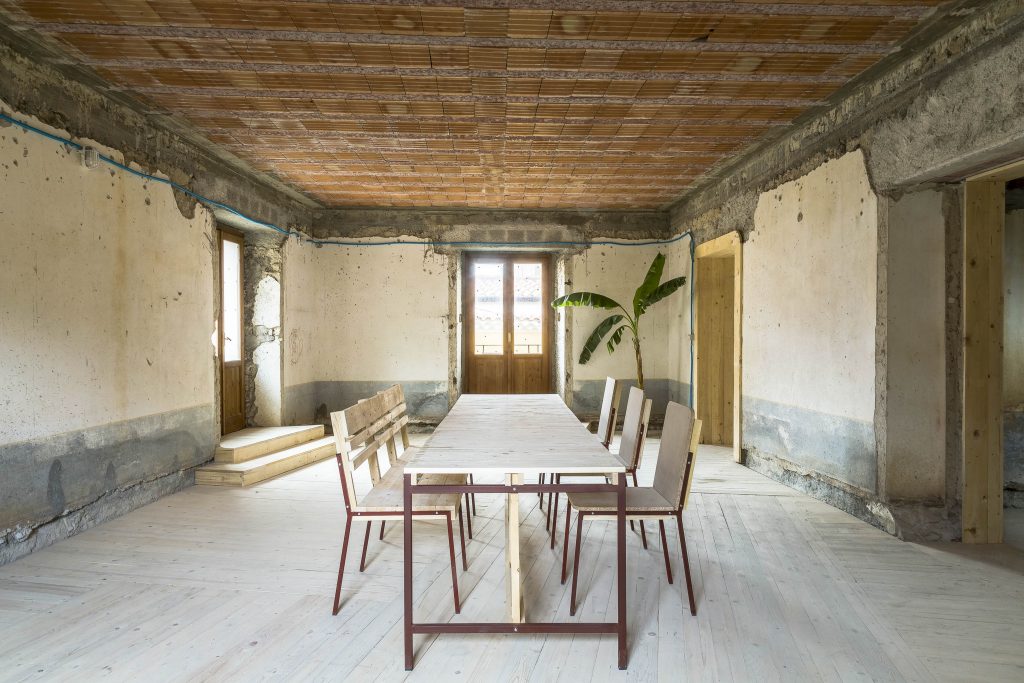
I first encountered La Rivoluzione delle Seppie in 2021, when I responded to your BelMondo Calling for residencies, and finally came to spend a weekend in Belmonte with my 3-year-old son. You were not there, but the Casa spoke for itself, as well as the mix of artists and senior citizens hanging out together at the local bar… I was so impressed by the history of the project, its future potential, the sense of urgency and the calm both attached to it, and of course I was completely fascinated by the Casa itself. Then I came two more times, once to co-run a week-long semi-private gathering of the collective, then again to start developing an experimental project of co-design, co-build, and co-living in Belmonte Marina. Please tell us the story of La Rivoluzione delle Seppie and of Casa BelMondo.
Rita
La Rivoluzione delle Seppie is a collective of young international professionals in the fields of architecture, art, and design, variously operating in the Calabria region and interested in exploring the boundaries of research, practice, and education. It all started in 2017 when we managed to develop a project of “collaboration for public action” – initially supported by London Metropolitan University – to tackle a set of interconnecting issues shared by many villages and urban-rural marginal areas in Europe. Depopulation, lack of cultural welfare, and social and environmental degradation combine with a growing tendency to remote working, city quitting, and digital mobility – which developed exponentially during and after the Covid-19 pandemic. So le Seppie set out to work on the cultural fabric of the community, help social integration, and contribute to the redevelopment of the territory: we have been pursuing this through a series of design-related activities and programmes that engage with the local communities of both the old village and Belmonte Marina, with migrants and refugees, and with students and professionals from all over the world.
Francesca
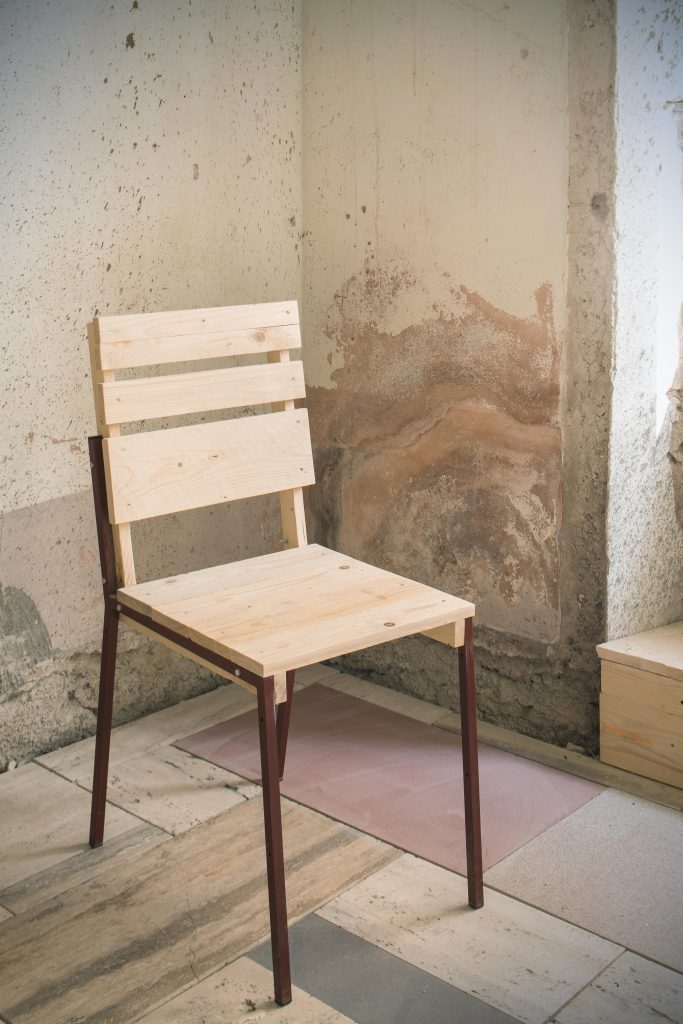
You told me once that it all started with a chair.
Rita
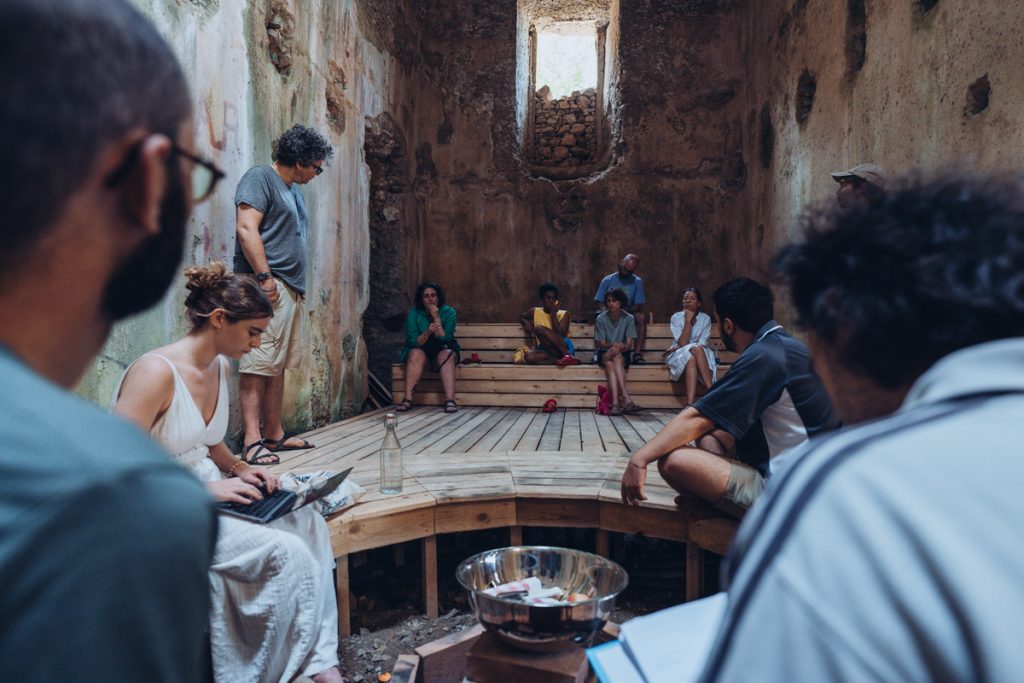
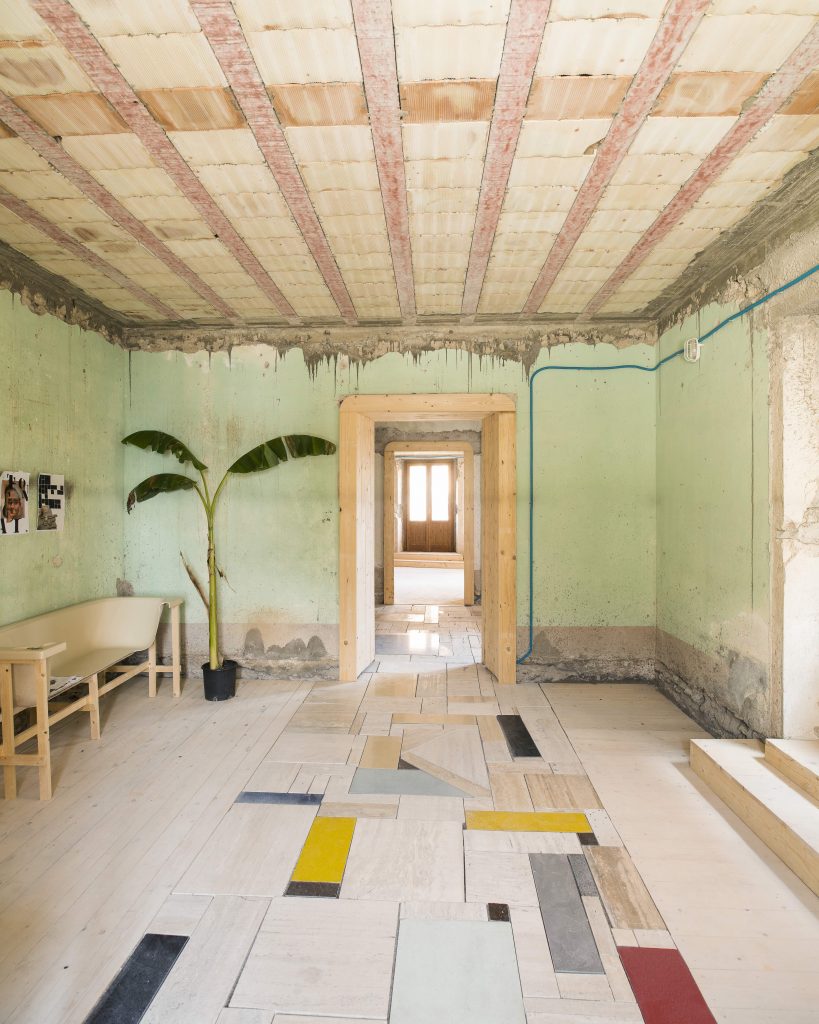
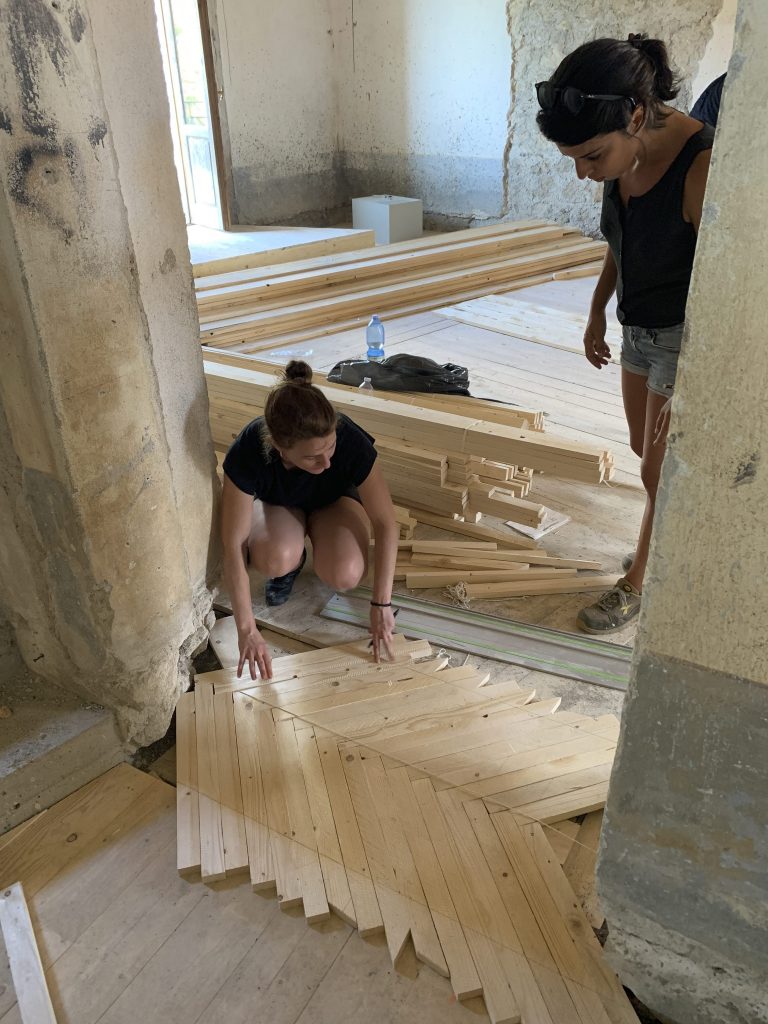
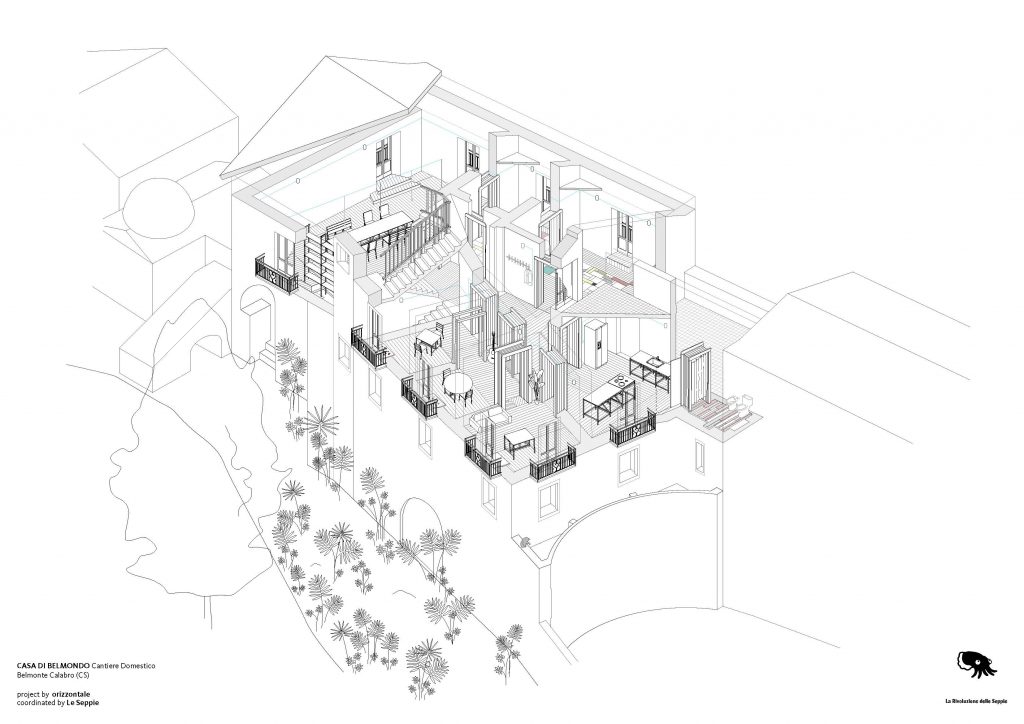
True. When we arrived in Belmonte Calabro in 2017, we decided that the first step to reach out to the community, get to know each other, and win their trust, would be to design a series of chairs for the village, with the village, in collaboration with Orizzontale, an architecture studio based in Rome. The following year we were invited to re-design the village library, next to the church, in the main square. In 2019, the municipality entrusted us with a large empty building, formerly a nunnery and a school, which became our headquarters and an experiment in space-making, a 1:1 scale prototyping opportunity, and finally a domestic construction site. Most of us were still students back then and would go back to Belmonte on every possible occasion, to keep working on the Casa and use it as a platform to develop more ambitious public projects. We were all temporarily living there, on and off, and attracting more and more friends and colleagues to come and contribute. Some for a weekend, some for a month, some for two years. We never called it a residency, because everything we did was so informal and unstructured, but that’s basically what it was: a design residency that would allow for residents to work alone or together on something very real and very tangible, like the physical building of the residency itself, while contributing to public programmes, while carrying out their personal research.
Francesca
And I imagine that the Covid-19 pandemic made the quest for alternative ways of living and working together more acute.
Rita
Yes. Very quickly between 2020 and 2021 the entire operation became quite intense and busy. We managed to get some funding, but also started the BelMondo Calling as a way to call for interest beyond word of mouth. It was always about the house, the village, the public action, and the territory. The Casa had no doors, no toilet, and a very basic kitchen for a while, so we only really attracted artists, designers, and architects who wanted to take part in the co-design and co-build, and experiment – no digital nomads working on their laptop, to be clear.
Francesca
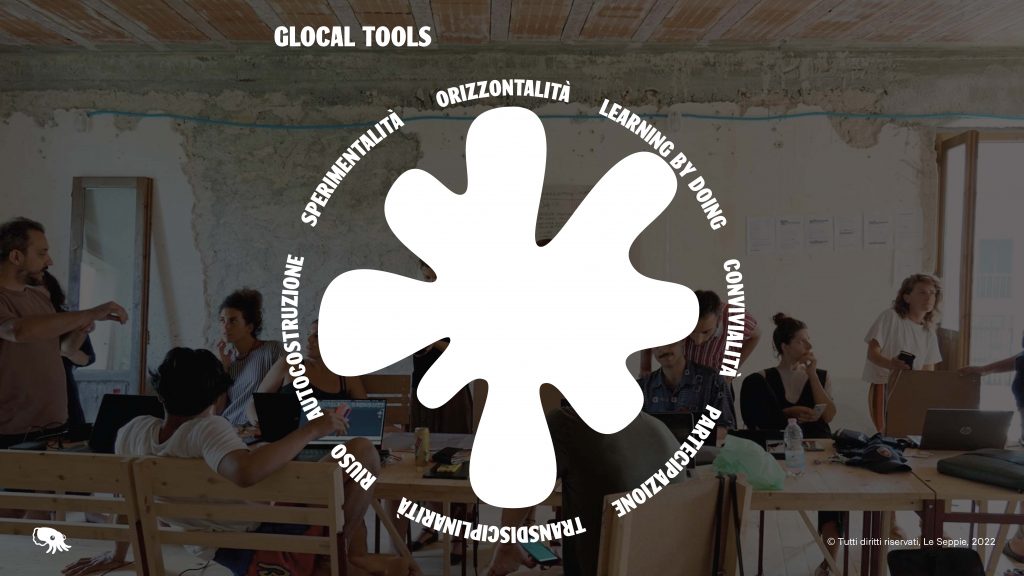
This is exactly what interests me about the project, this correspondence, this feedback loop, between the organization of the residency and the residents’ participation. There is no host and there is no guest, only peers, and an incredible porosity between le Seppie, la Casa, and the local community, freedom and a strong sense of responsibility. All of it can be considered spatial practice, I think.
Rita
I agree, and what comes to mind right away is the challenge, and sometimes the difficulty, of working with different people at different times towards a collective goal that always remains in process. For me, that is spatial practice proper or, as I call it, relationship architecture. How to integrate the core group of le Seppie with all the other residents? How to adapt to a new space every time I go back to la Casa? The house changes according to those who inhabit it, and even if now we are finishing restructuring the upper floor as a guesthouse, the entire Casa keeps on shifting functions and divisions. And every time I go back I need to accept it and adapt to it, and let go – not easy.
Francesca
Okay, but then at the same time all these people coming and going contribute to the making of a place and space, and to a series of activities etc., without compensation. They use the project as a platform for connection and experimentation, but they basically work for free towards something that will outlive their contribution. Let’s talk about this exchange a bit more.
Rita
This is where the pedagogical aspect of it all kicks in, I think. In 2019, at some point, we were 80 people working in the house, some students, some Brexit refugees, some people from the village, some migrants, and some university professors. I remember that to put down one of the main floors, made of leftover marble slabs, there were nine of us on all fours negotiating for days… People feel ownership, they feel they will always own the pattern of that marble in the south of Italy, and the way that pattern was shaped. So the exchange and the legacy exist mainly at the level of methodology and replicability, and the learning that people then go and mix with their existing practice. At the same time, those residents who are more interested in organizing activities in the village are supported in financial, social, and practical ways to realise what they have in mind. But you know, in the end, I think that the driver for most people, especially younger people, is the passion and the gratification to build something together that has nothing to do with studying or working, and the clock of daily life.
Francesca
And what happens now that you have a toilet, a kitchen, a guesthouse, central heating etc.… Is the Casa still a canvas, an open ground?
Rita
Yeah, perhaps the time of the domestic construction site is over and our design residency needs to be formalised in a different way. Let’s talk about that next time you come to Belmonte.