Introduction
This collaboration between IASPIS and abRen/RAAS Architects was developed within the IASPIS programme of experimental pilot residencies, aimed at inquiring/exploring and testing new forms of international exchange within architecture and design. The idea for the collaboration emerged from discussions following an initial meeting between Magnus Ericson, Head of Applied Arts IASPIS, and architect Rahel Shawl, co-founder of abRen/RAAS Architects, in Stockholm in May 2019. Plans evolved during an extended period but were disrupted first by the Covid-19 pandemic, and later by shockwaves of the outbreak of armed conflict in Ethiopia in November 2020. Stockholm-based architect Tatiana Pinto was selected for the programme in 2020, but the residency/fellowship could only materialise in a remodelled/revised and postponed version/format, carried out in two periods during 2022 and 2023. The first period took place as an online residency/fellowship, physically hosted by IASPIS in Stockholm, over three weeks during the autumn of 2022. The second was realised in the spring of 2023, when Tatiana was able to travel to Addis Ababa for a three-week stay at/with abRen/RAAS Architects, 3–22 April.
Magnus
When we first met in Stockholm in May 2019, you presented abRen at IASPIS. You were invited by Alessandro Petti in relation to the Decolonizing Architecture postmaster course at the Royal Institute of Art in Stockholm. You had hosted the course participants during a trip to Ethiopia and Eritrea for researching the Italian colonial architecture heritage. This was connected to and pursued within the framework of abRen. I became immediately interested in this platform as a possible space to collaborate around a programme of pilot residencies that I had initiated at IASPIS, where I was interested in thinking around and exploring new ways of facilitating international exchange as residencies or in other formats that would achieve similar effects. Perhaps you can describe the idea behind abRen and how it had developed, as to get an overview, Rahel?
Rahel
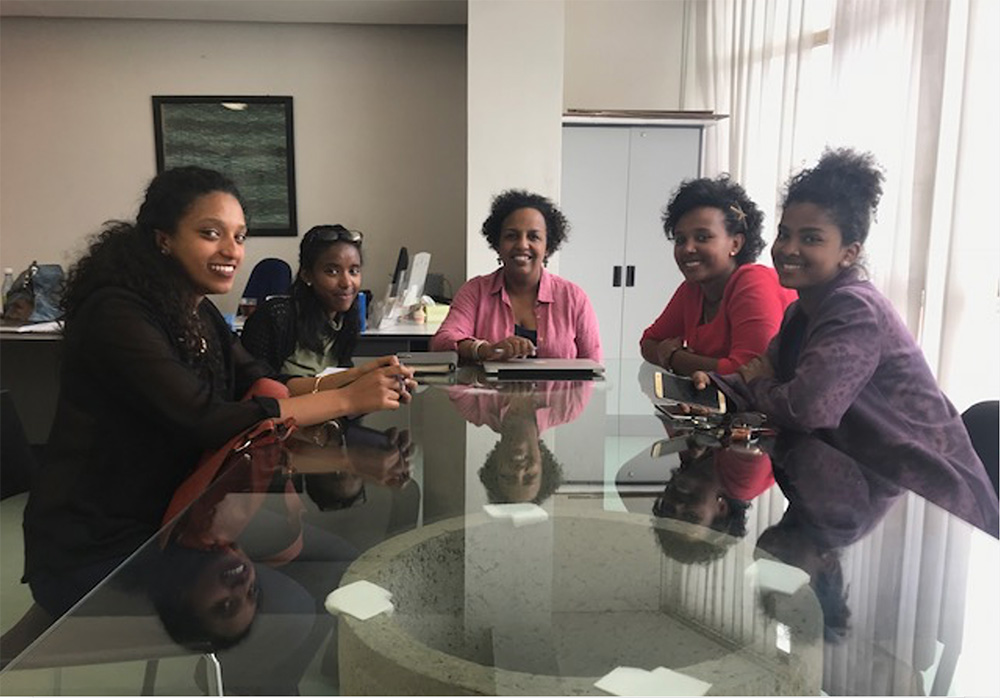
The idea of abRen is strongly linked to my identity and who I am as a person that continued into the way I lived my life and then after how I want my design firm RAAS Architects to be. I grew up in a community of togetherness, of support within families, neighbours, friends; of resolving problems together and where everyone cares for the other. This is the way of life and the beautiful cultural values of our societies in our country, Ethiopia. People in need were always taken care of, including support from family and friends for my mother and my siblings when things got hard for us. Already from high school, I worked with supporting women in literacy in the neighbourhood, children in need of tutoring, or those who needed support in their daily lives. Using my skills as a young architect, I designed jewellery with Ethiopian beads and leather and trained women in an NGO that supported mothers with children for income generation. Already in my 20s, I was organizing fundraising as a scholarship for children from poor families to fund them in their university studies. When I started RAAS Architects, it became natural for me to open the doors to those who needed guidance, mentorship, and support in their professional work. It started with one-on-one mentorships; internship open-door policies at work that students and young architects could use the space for incubating ideas. Most importantly, girls would be invited to tea, and we would just talk about our issues and support each other, especially women architects. Eventually, abren was born from the need of the spaces we created for creation and exchange of knowledge, for inclusive and safe spaces of learning and of mentorship and empowerment. ***I have added a synopsis of abren to this document
Magnus
I was particularly interested in the possibility, through a collaboration with this important platform, to make possible an exchange of knowledge and experience between Sweden-based and Ethiopian practices, but also to create an extraordinary possibility for a Sweden-based practitioner to learn from this context and culture and at the same time contribute to developing the platform of abRen itself. We discussed a lot around how to create a situation where the visiting practitioner would equally contribute to and benefit from abRen and the residency – where abRen would not just host someone with expectations of being cared for and given space for their own work, but rather creating a relationship. We even discussed the terms “residency” and “fellowship” in relation to this. Can you describe your view on this and perhaps dwell on the role as a host here?
Rahel
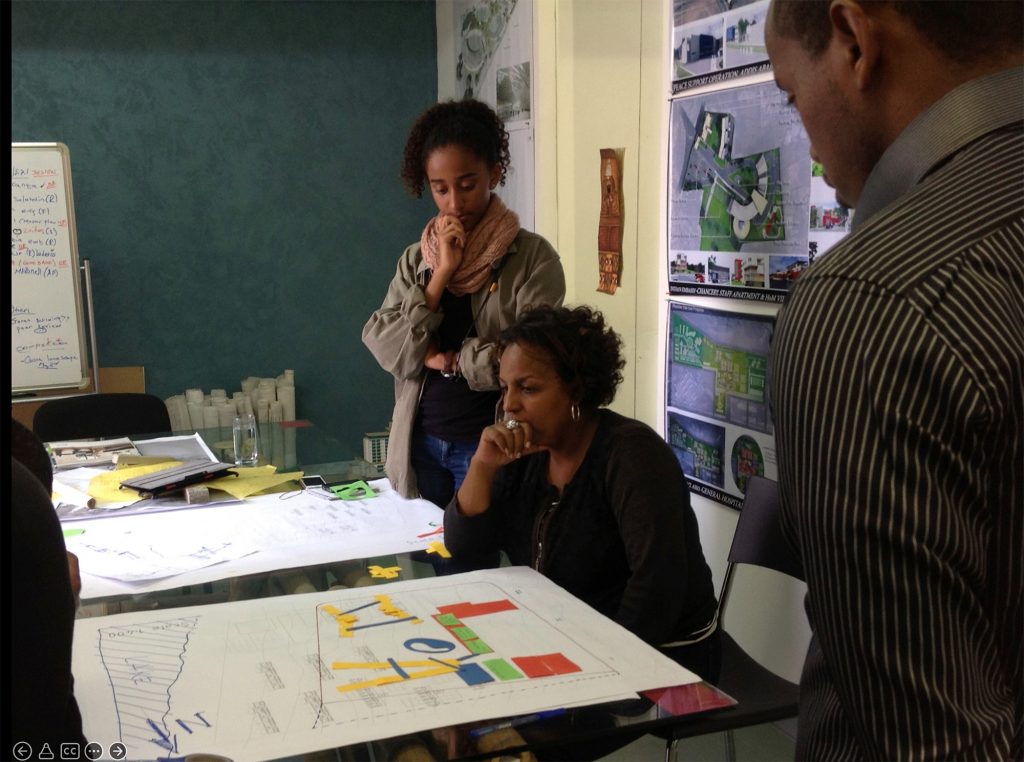
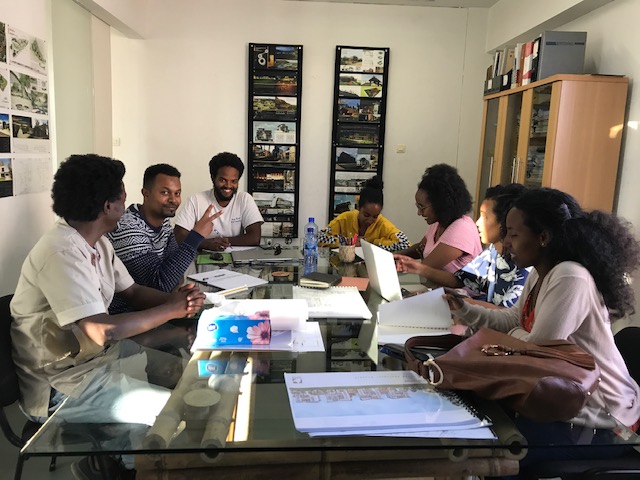
abRen is a platform for exchange and production of knowledge related to the built environment. The platform consists of an informal gathering for professional practitioners and a mentor/intern programme for architects and students, both closely tied to and operating in relation to the practice of the (local and international) network of RAAS Architects.
abRen as a concept is built upon the idea of creating a space for inquiry and inclusiveness where professionals, non-professionals, to-become-professionals, and enthusiasts in architecture, spatial and urban practice gather. With the professional experience from RAAS Architects, the programme, and the energetic and vibrant youth network from the mentor/intern programme, it is set on the journey to create a dynamic platform where norms are challenged and redefined. abRen strives to promote architectural knowledge while advocating for gender equity in design practices. Due to the diverse composition, abRen aims to be a fertile ground to generate heightened professionalism and self-confidence governed by ethical standards of integrity, mutual respect, and free expression.
abRen values the process just as much as the outcomes. By ways of internships/ mentorships and cross-border fellowships/residencies, empowerment of the youth will be at the forefront of this endeavour. Drawing knowledge from architectural heritages, past practices, local building cultures, and crafts, members of this platform will explore new ideas that permit further delving into crucial and often overlooked issues of our built environment. For other African and international practitioners, abRen will also form a base for research and learning from the context and built environments of Ethiopia and other countries in Africa. abRen aims, through writing, documenting, and conducting practice-based knowledge and research, to redefine the learning while simultaneously representing the generosity and culture of community that is inherent to the ways of life in Africa.
This space can’t be a residency as there is no dedicated workspace or studio, access to resources or accommodation, and financial means to cover for transportation and stipend. A fellowship needs the same physical spaces as well as intellectual resources and environment that may need to be curated. It is more geared for people to explore innovative design solutions to impact them in their field.
In its present state, abRen could possibly facilitate accommodation, workspace, context, and support for one or two international or Sweden-based practitioners during the period of their collaboration with abRen. The practitioners will be introduced to the environment, local practitioners, students, interns, and the Addis Ababa context to be able to develop research where the topic of research is first approved by abRen. The selection of grant holders could be done through an open call, the forming of a shortlist, and final selection by abRen. It may also be a process where suitable practitioners are directly invited. We discussed that IASPIS could possibly support the practitioners with a grant covering travel, accommodation, and subsistence during the stay. IASPIS could also financially support abRen with a fee to contribute to costs for space, support, and administration.
As a host of these grant holders, and understanding that abRen is a gifted space by RAAS, I strongly believe that the person coming to this collective needs to be more than a practitioner who will do research, enjoy the touristic experience, and then leave. My wish is that lasting impact must be made by these visits, that our young people must benefit from this. The mentorship role, the passion for sharing knowledge, and the willingness to learn and immerse in the local context are important factors for the visitor to have, as this is the reason for abRen.
Magnus
We had this idea that the visiting practitioner would not only be part of abRen’s programme through her research but actively reflect and contribute to the actual development of the platform. Can you tell me a little about how she and other fellows have done this and what it has meant to abRen?
Rahel
This means that so far, all the people who had interest in abRen saw the social aspect of the platform and believe strongly in how important a role it holds in Ethiopia. It is a passion of mine to empower young professionals, and I do this by using RAAS resources as a backbone. I freely give my time and resources as my social responsibility, and therefore others see this and support it too.
I was happy that, in the case of the visiting practitioner Tatiana Pinto, this was the attraction for her – to experience and share knowledge, to understand on the ground the needs and aspirations of the collective, and to involve and make a difference. She helped abRen organize a couple of events and a workshop: one experience-sharing platform at the EiABC School of Architecture with the young girls in the graduating class; the other was a workshop that abRen prepared with design practitioners in Addis Ababa with the title “New Realities in Architecture”. Furthermore, Tatiana supported abRen in developing a template for compiling all the events held by the group to better document the works of the collective.
Magnus
I know that Tatiana’s experience from this test was rich and very appreciated. I think from my point of view, working in a rather conventional residency, that abRen, as something that exists between your rather personal space, the design firm RAAS, and the architecture and design community in Addis Ababa, can offer something really unique. The invitation is perhaps not for anyone, since coming to and being hosted by abRen requires a certain sensibility and willingness to share slightly beyond one’s professional practice – and being open to being hosted with the same commitment and generosity. I also think that the way we started to discuss a collaboration and developed an idea out of curiosity and trust also reflects this unique space, and I really appreciated this open, generous, and trustful invitation.