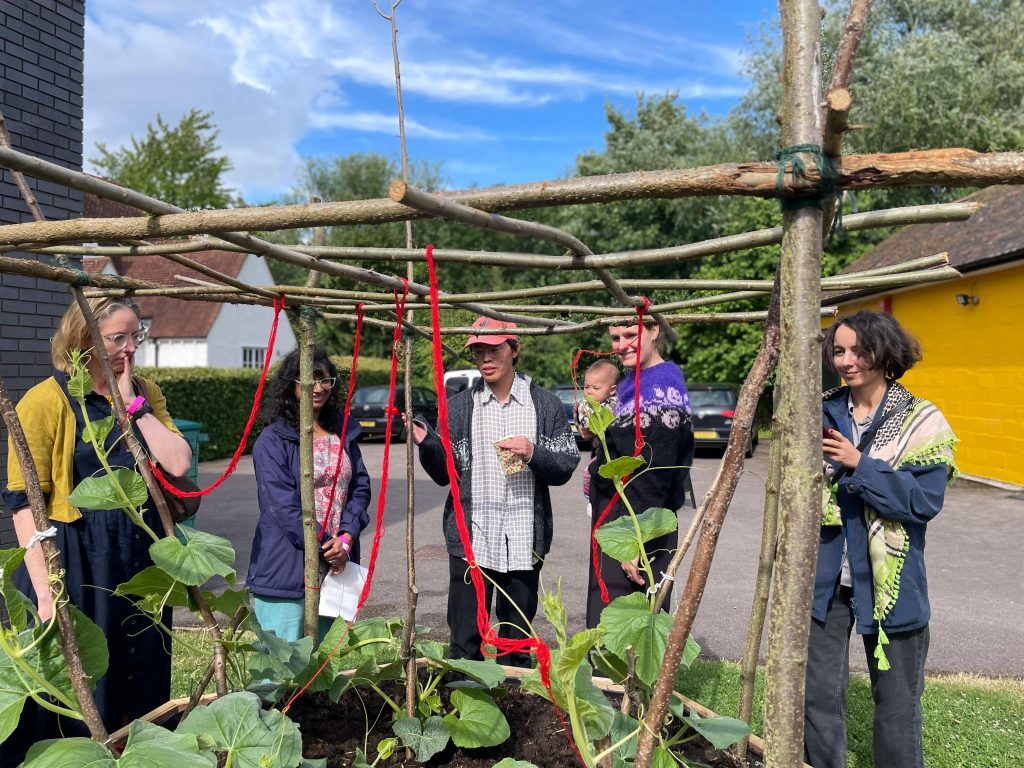
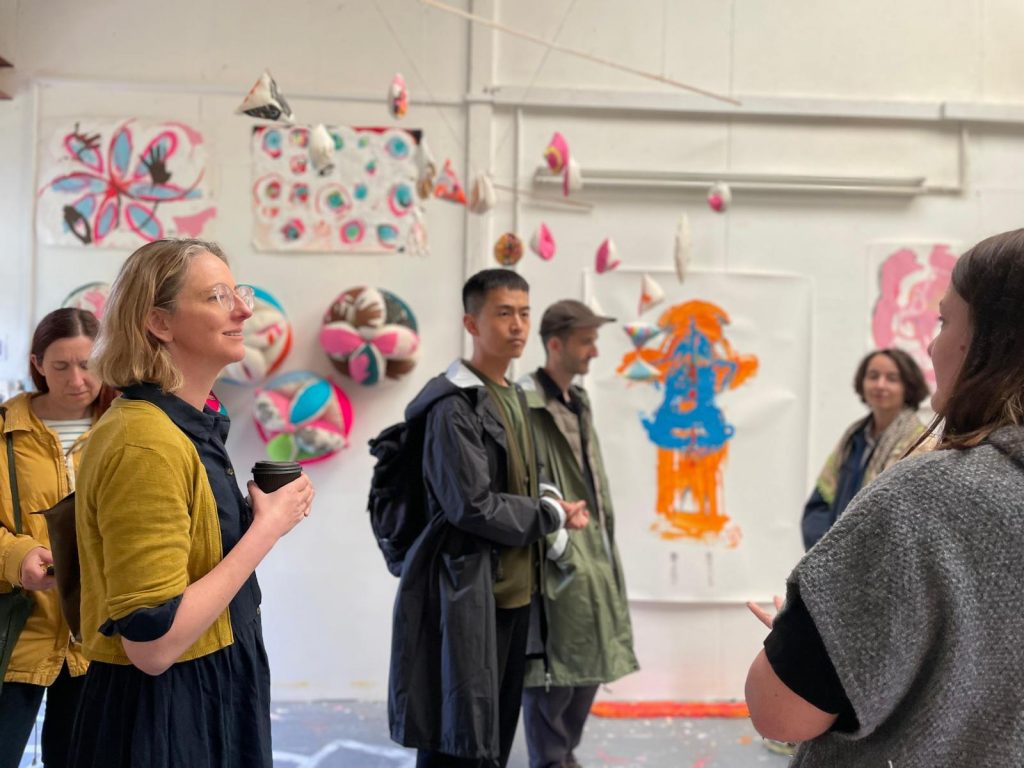
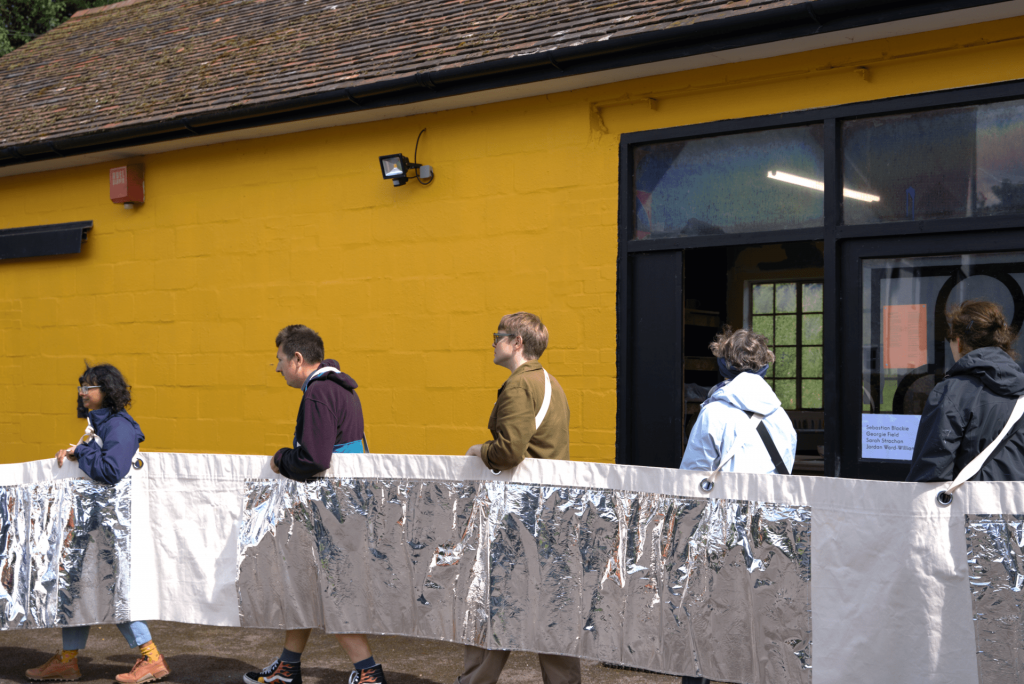
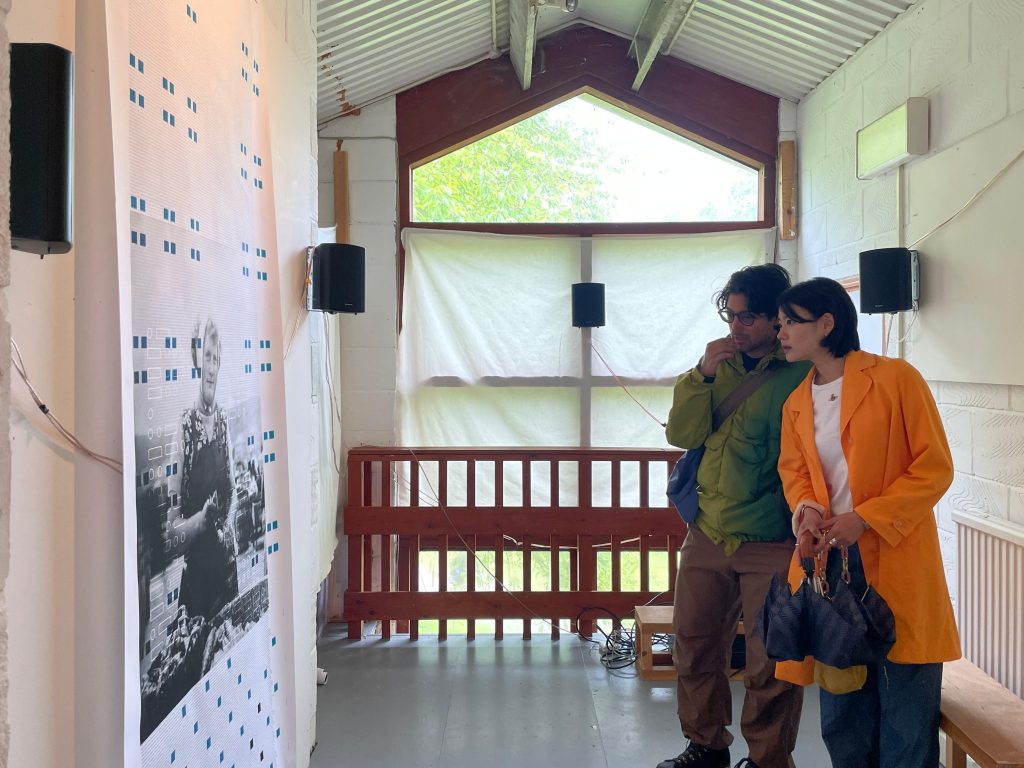
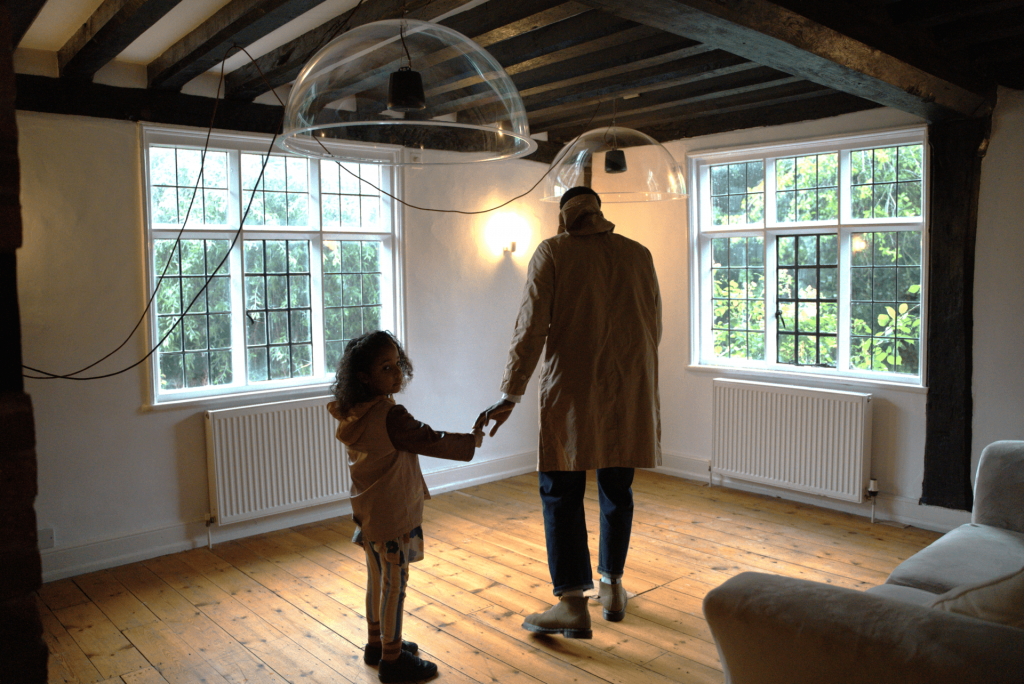
For the past two years, I have worked as Assistant Curator at Wysing Arts Centre to support the running of its residencies, commissions, and events programme. Wysing is located ten miles from central Cambridge, and its rural site has 11 acres of land, four studio blocks, a large project space, a ceramics studio, a recording studio, an open studio, a live/work flat, and a 17th-century farmhouse for residency artists to stay in.
When I joined the team, we made the decision to stop our exhibition programme, shifting our focus entirely to supporting artists through paid space and time to think outside of daily life, with no expectation of an outcome or finished work. The following piece explores what it means to host in this way.
Residencies at Wysing are designed for and with artists in residence. Unlike typical programmes, which offer a month or two away from home, Wysing hosts artists for a full year. This longer span allows them to truly consider what they might need, for their practice and for themselves. Is it a welcome break from a continuous stint of production, or a place to gather collaborators, colleagues and friends to make, rest, and think together?
The continued curatorial, logistical, and practical support can be transformational. The more time artists have to be in dialogue and test ideas within our programme, without the pressures of production, and the more institutions and organisations value that time and pay for it fairly, the stronger cultural life becomes – not only at Wysing but throughout the UK and beyond.
We do not rush into work. Instead, we encourage artists, on their invitation to our programme, to think, play, walk, eat, and read with us. Sharing texts, swapping information about practices through initial studio visits, allows us to build relationships with artists to create models of critical friendship, where we can encourage ideas, works, and new processes together.
When possible, we invite artists to begin their year with a long weekend onsite. A slow introduction to Wysing’s rhythms. The stillness of our site, coupled with encouraged idleness, can bring in new inspirations quietly, often in unexpected ways. Artists might report that their best ideas have come to them when they are reading in bed, having a shower, walking the site, or eating at a communal lunch with our studio artists. Time spent relaxing can lay the foundation for a residency shaped by curiosity and imagination, rather than urgency.
Artists might arrive intending to write a new book or develop a commission, only to find themselves experimenting with clay for the first time. Our flexibility in time and access to varied resources allows for playful digressions, which often become the most meaningful aspects of their residency.
Artists can and do bring family, friends, and collaborators – extending our invitation to more participants, and allowing for a series of mini-retreats to take place throughout the year.
We make space for past artists in residence to return. At any given time, we might be hosting many different artists at different stages of their practice, with some returning years after their initial residency. Once artists understand who we are, where we are, and what the team can offer in our context, we like to revisit work and sustain our support.
They could work with us through our work with young people, as residency advisors helping us to nominate and select future residents and studio artists, or by conducting studio visits and crits for current residents. Others collaborate with us through our two-year commissioning programme. The more we understand an artist’s practice, the more effectively we can support it.
Often, it takes time to reach a place of mutual trust and ease within our model of critical friendship. But when we do, our hosting and relationship becomes richer, which allows for a fun and generative process.
Even while at home, we consider artists are currently “in residence” with us. Through remote studio visits and check-ins, we remain in dialogue, which offers a sense of continuity.
For those with caring responsibilities or access requirements, the residency can, and does, extend beyond our rural site – which is not always easy to travel to, or affordable to access, for our year-long programme, particularly when we host international artists or those living in remote locations. We are mindful of making sure we can support a range of needs and practices, regardless of location.
Hosting is therefore not bound by geography, but by a sustained commitment to supporting an artist and their practice, wherever it unfolds.
As we do not curate exhibitions, I have learnt to use a broader sense of the word, and though it is an overused term (particularly in an arts sector that can often feel careless), my role is to care for people, for ideas, and principles.
Hosting at Wysing takes time and a lot of work. It is administrative, and sometimes we realise that this administration is failing artists in certain ways, so we take time to reshape and readjust its systems. This work helps to make things happen, and while the output does not result in the culmination of a project or show, it encourages a collective energy that makes testing, failing, trying, and exploring possible. To watch ideas take shape and evolve is expansive and vital.
Hosting, for us, means the ordering of activities, the scheduling of people, the booking of studios, accommodation, and travel, in the hope that these actions will make some days a little easier, and give someone else time to think, rest, and play.
We remain quietly in the background, allowing artists to get on with what they would like to do and offering conversation when wanted. This unobtrusive presence hopes to build trust and create conditions where artists can slow down, take detours, and expand in ways they may not have been able to imagine.
We embrace unhurried creativity which fosters a cultural ecosystem that values reflection and rest over production. A model which we hope will ripple out beyond our site.
Wysing Arts Centre is a progressive organisation in a rural setting that was established by artists and philanthropists, in 1989. We enable artists and publics to engage their imagination freely and take creative risks; we believe that everybody has the right to time and space for creativity, away from the distractions of daily life.
The site is ten miles from Cambridge city. It holds 20 subsidised artist studios, accommodation that enables us to host up to 80 visiting artists annually, recording and ceramics studios, flexible space to experiment, present, and learn, fields, woodland, and several outdoor works. Work made at Wysing is seen worldwide. An accessible digital offer increases reach and archives our work; our youth-led learning programme empowers future generations.
Wysing invites artists from across the world to stay and reflect on their practice without the pressure of producing new work: time spent without a plan can often be when the best new ideas emerge.
We take a proactive, intersectional approach to equity and inclusion, and often support artists who have not been well supported by mainstream gallery and funding systems.
Several artists who have spent time at Wysing have gone on to be Turner Prize or Paul Hamlyn Award winners. Some artists go on to be commissioned by Wysing to make artworks, music, and performance; many participate in Wysing’s lively events.