We first met Jenny Adams on one of the hottest days of the summer, whilst enjoying tea and cake, in the enclosed and tranquil garden of Edward Edwards House, a 1970’s two-storey red-brick almshouse off the Blackfriars Road, just south of the Thames. We were there to chat about art, culture, and hobbies with people who live in the almshouse, having personally invited every resident to come and talk to us as part of our consultation to develop a cultural strategy and arts programme for Southwark Charities. Jenny came to join us and said, “Would you like to see my sketchbooks?”
An independent curator and cultural strategist, one of my areas of research and practice is in new forms of cultural institutions – I am interested in historic and contemporary examples of artists’ homes as sites of cultural production and encounter. In a time of public-sector retrenchment, housing crisis, and artists’ economic precarity, we need new economic and structural models to support the production of art and community. I include practices of design in my referencing of art here. Domestic spaces, offering a familiar everyday context of encounter, can help us rethink how we live. Historically, artists’ homes have trialled and tested models of future living. Contemporary examples, with an emphasis on intentional community and public and collective practices, are nurturing new modes of being in the world, evoking a creative, social, civic, and critical questioning of our relationships with each other, relations to the environment, forms of dwelling, and creative domesticating. Art in the everyday, and art as the everyday.
The design residency I will discuss here is that of the inaugural designer in residence at Edward Edwards Almshouse. The residency is part of Tenderground, the cultural strategy and arts programme for the almshouses of Southwark Charities, which I co-direct in collaboration with the artist Laura Wilson.
Almshouses are charities providing residential units, usually targeted at people in a particular community. Originating in medieval times as places of shelter and hospitality, the common building form of an almshouse is of small individual flats around a courtyard or garden. The Edward Edwards site on Blackfriars Road, a main thoroughfare just south of the river Thames, saw its first almshouse built in 1753. The current building, constructed in 1973 and not fit for purpose, is being demolished and redeveloped, with a scheme design by Fathom Architects, to create a new 15-storey building of significantly increased scale – provision increasing from 26 to 62 flats. Edward Edwards House provides independent living spaces for individuals over 55 years old who are in need, hardship, or distress, and who have a connection to the London Borough of Southwark. The community, aged from 55 to late 90s, encompasses different generations and, in requiring the commonality of a connection to the borough, becomes a bulwark against gentrification, an anchor of localness in a rapidly changing area.
Almshouses are fascinating as cultural institutions – founded on notions of care, they have clear purpose, protocols, and developed codes of behaviour between residents, and between residents and surrounding communities. This is a rich context in which to consider the potential role of art, design, and culture. In creating the Tenderground cultural strategy and programme, Laura Wilson and I wanted to tread gently into the existing community of the almshouse, to understand the culture and rhythm. Our approach is personal, and reflects behavioural patterns of neighbourly hospitality, rather than formal approaches. We operate through a system of invitation.
Jenny Adams was commissioned as the inaugural designer-in-residence of Edward Edwards House during the final year of occupation in the old building, before the residents were rehoused and redevelopment began. She was commissioned through direct invitation. Jenny is 93 years old, an applied arts graduate of the Central School of Arts and Crafts. She had a career as a graphic designer and illustrator, including being an in-house graphic designer for John Lewis Partnership in the 1950’s. She now runs an art class and a yoga class at the local Blackfriars Settlement. Jenny had been living in the almshouse for four years when we invited her to be our designer in residence.
The aims of the Tenderground strategy for the almshouses of Southwark Charities are to explore methods and processes through which art and culture can enhance the daily life of residents, to assist in processes of change and transition, to foster the building of a community, and to support the activation of the new building. Our invitation to Jenny as the first commissioned practitioner signalled to the residents, the trustees, and the wider community that this was a programme being developed with them.
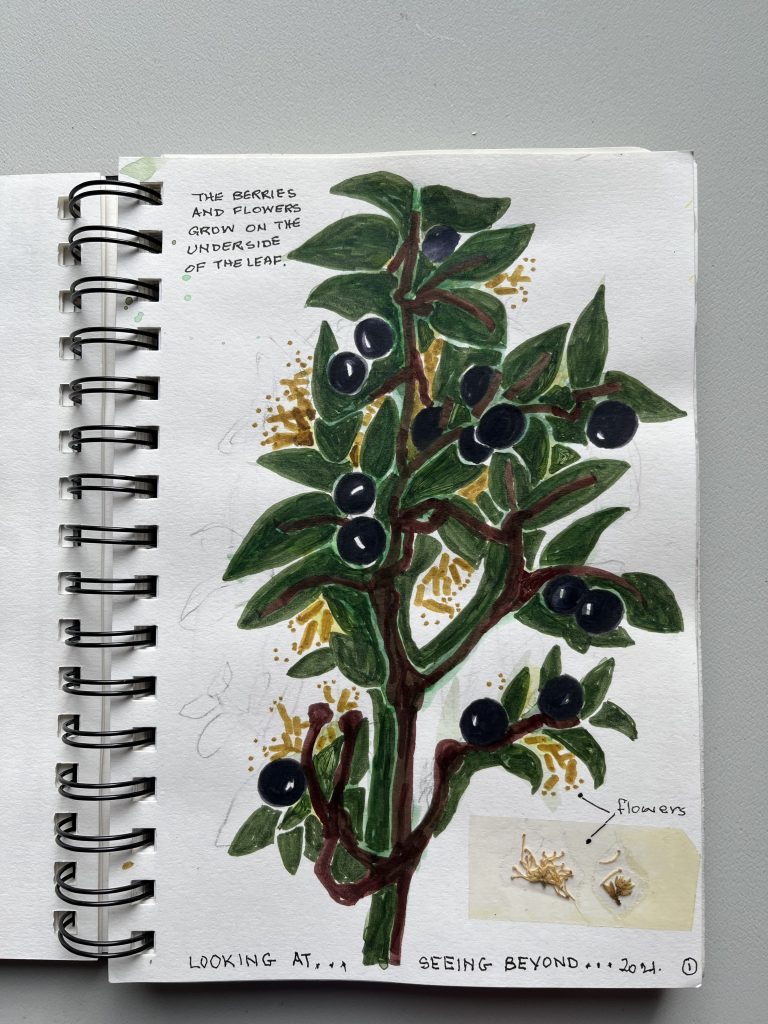
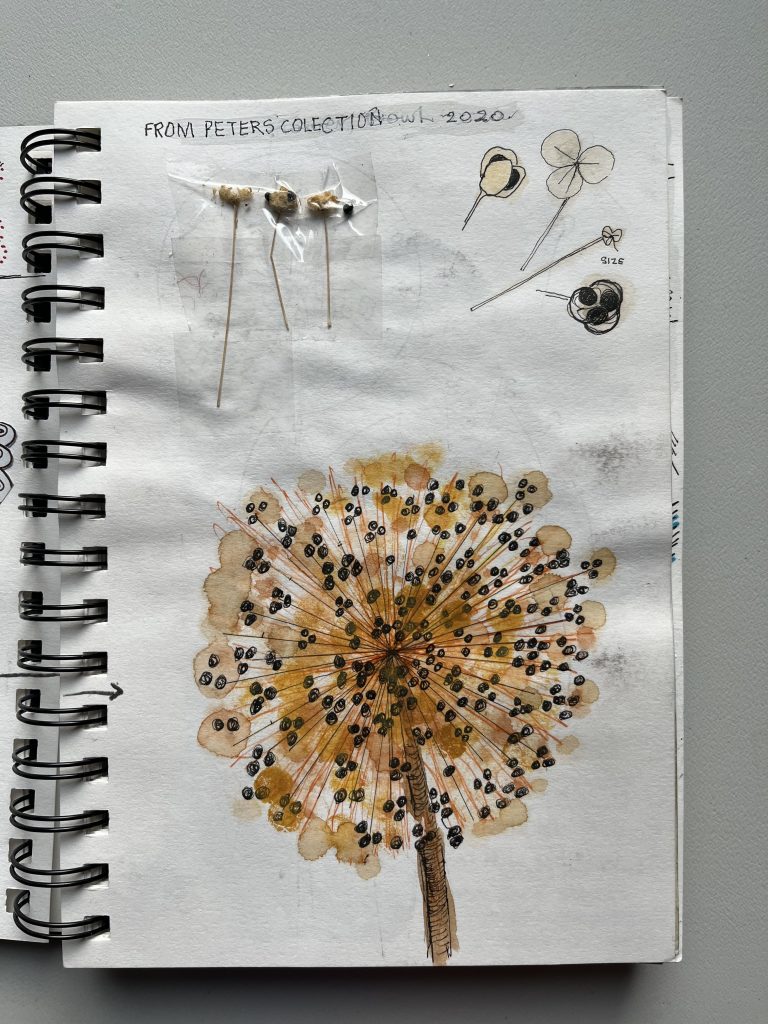
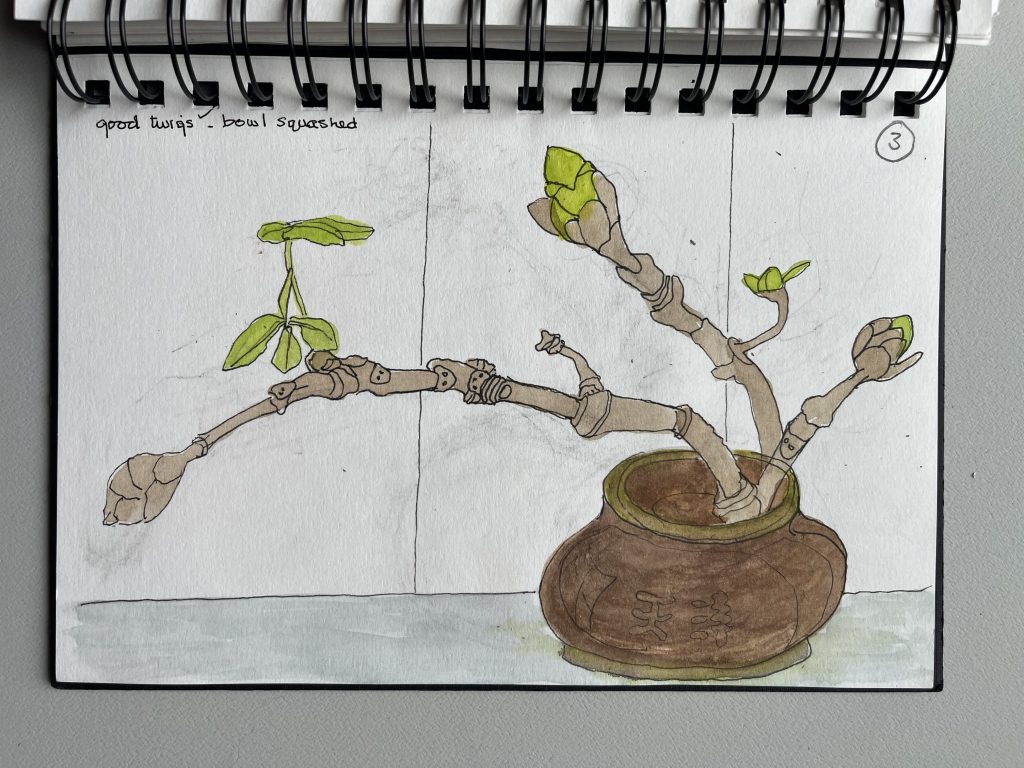
Jenny was an embedded designer in residence (designer-as-resident) to observe, record, articulate, and visualise. She draws everyday – remarkable observational drawings, sequences from her window of men at work, flowers from the residents’ garden, and natural forms she collects in her daily life. Through her work, she expresses the immediacy of the experience of the almshouse resident.
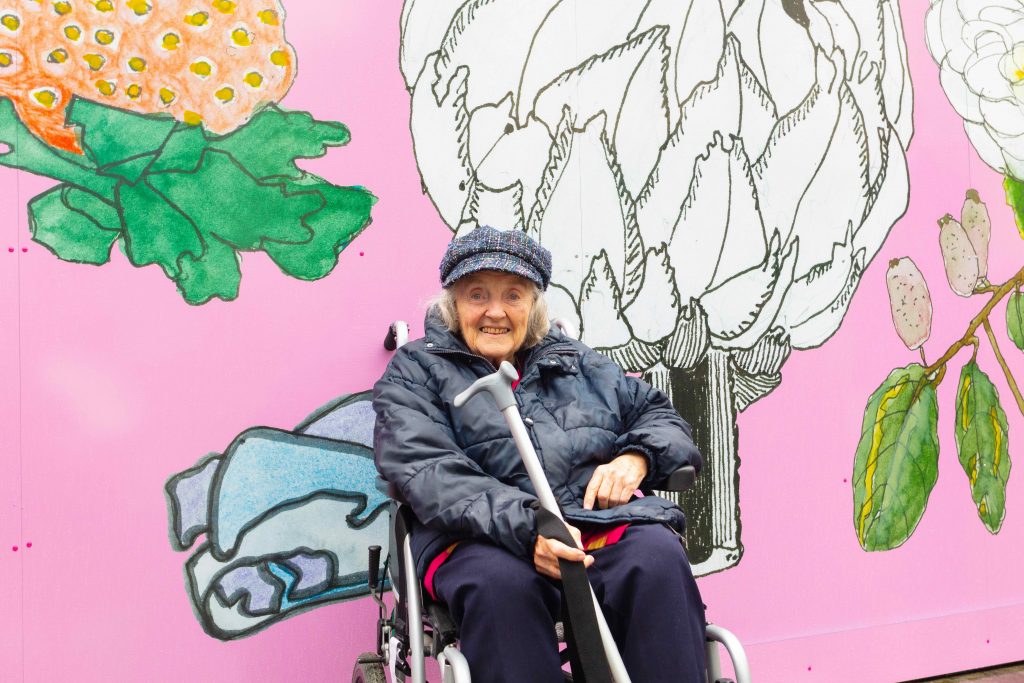
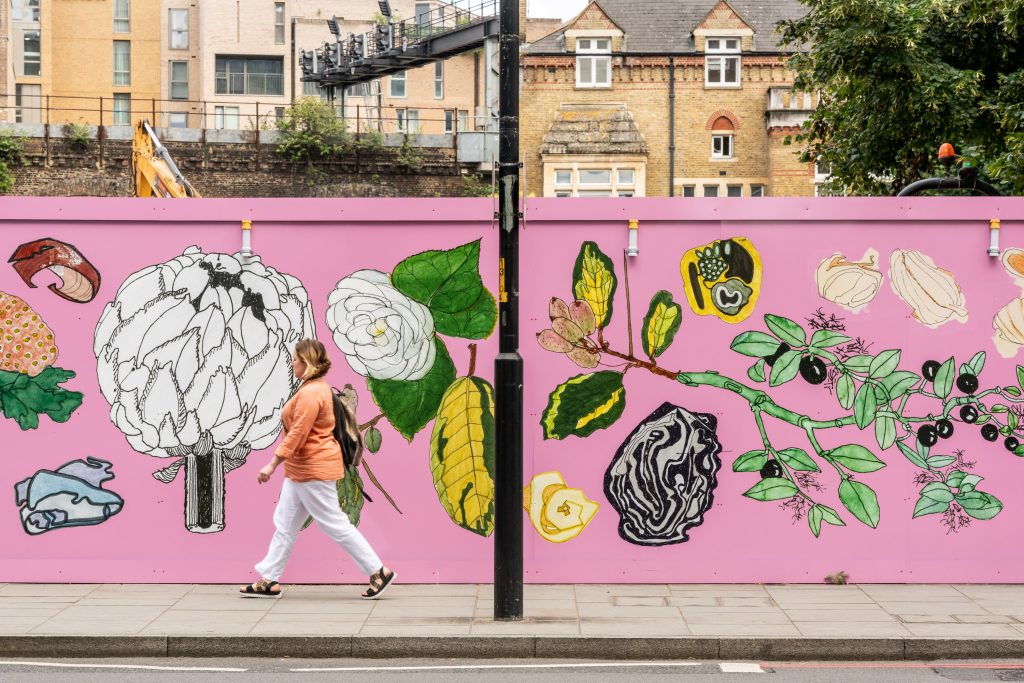
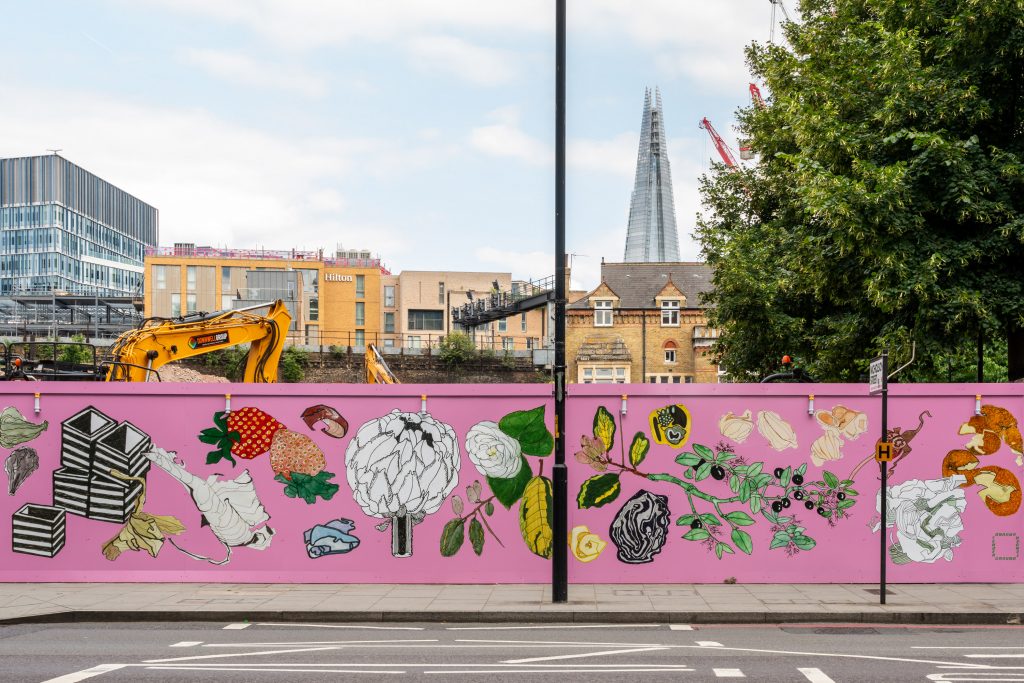
One of the discrete physical outcomes of the commission was the creation of the bold and beautiful design for the hoardings, which now surround the site on Blackfriars Road during redevelopment. The design for the hoardings, a collaboration with graphic designer Charlie Noon, uses Jenny’s drawings of nature observed within the garden or views from her window; these now surround the building site with a visual and poetic memory, an honouring of what was there before.
Jenny’s reflections and suggestions have informed the arts and cultural programme for Tenderground. Her work changes how the institution sees and understands itself; we begin to see through the eyes and understanding of the resident designer. Her work asserts the individuality and potential creativity of the community members. Jenny is admired and respected by the other residents as their artist/designer in residence, and the invitation to Jenny to create our first public work has created trust and validated the arts programme within the community.
In making the invitation to Jenny to be our designer in residence, we were conscious of barriers to the engagement of older people in arts production and support. Jenny invited us to visit her in her flat, which she had transformed into a studio. The quality of her work, and of the reflections she was contributing around ideas of design and culture in the new almshouse, were immediately apparent. Jenny would not have applied for an opportunity; we needed to recognise her potential role and invite her directly. The principle of locating, and directly supporting, the practices and activities of a target community within that community can help to redress the power imbalances within arts and cultural funding and provision.
Jenny’s role was a critical part of the Tenderground pilot programme, which also included a film-maker, visual artists, composer, and choreographer. Her experience of living in the community, and in the building, gave her and us a particular insight into the potential role art and culture can play in that context. We think carefully about the age range of the people we commission, and the opportunities around intergenerational engagement. We are increasingly aware of blind spots and barriers within the worlds of art and culture, to the inclusion and engagement of older people. We are actively exploring models of artist/designer in residence within the existing almshouses of the charity, and within the new building.
The public hoardings commission changes how the institution communicates itself, and how others see and understand it. Jenny’s work offers an invitation to the other residents, and to the wider community. Her work challenges common perceptions of older citizens, and visibly and publicly asserts the value of our residents as creative and productive people, living interesting lives. Most importantly, Jenny is an inspiration on how to live – testament to the value of creativity, curiosity, close looking, and care.